Decide what to build before you spend on it.
By mapping how work really moves, choosing tools on evidence and setting clear rules for AI, we help owners of small and mid-size businesses spend on the few changes that matter, and skip the ones that would not pay off.
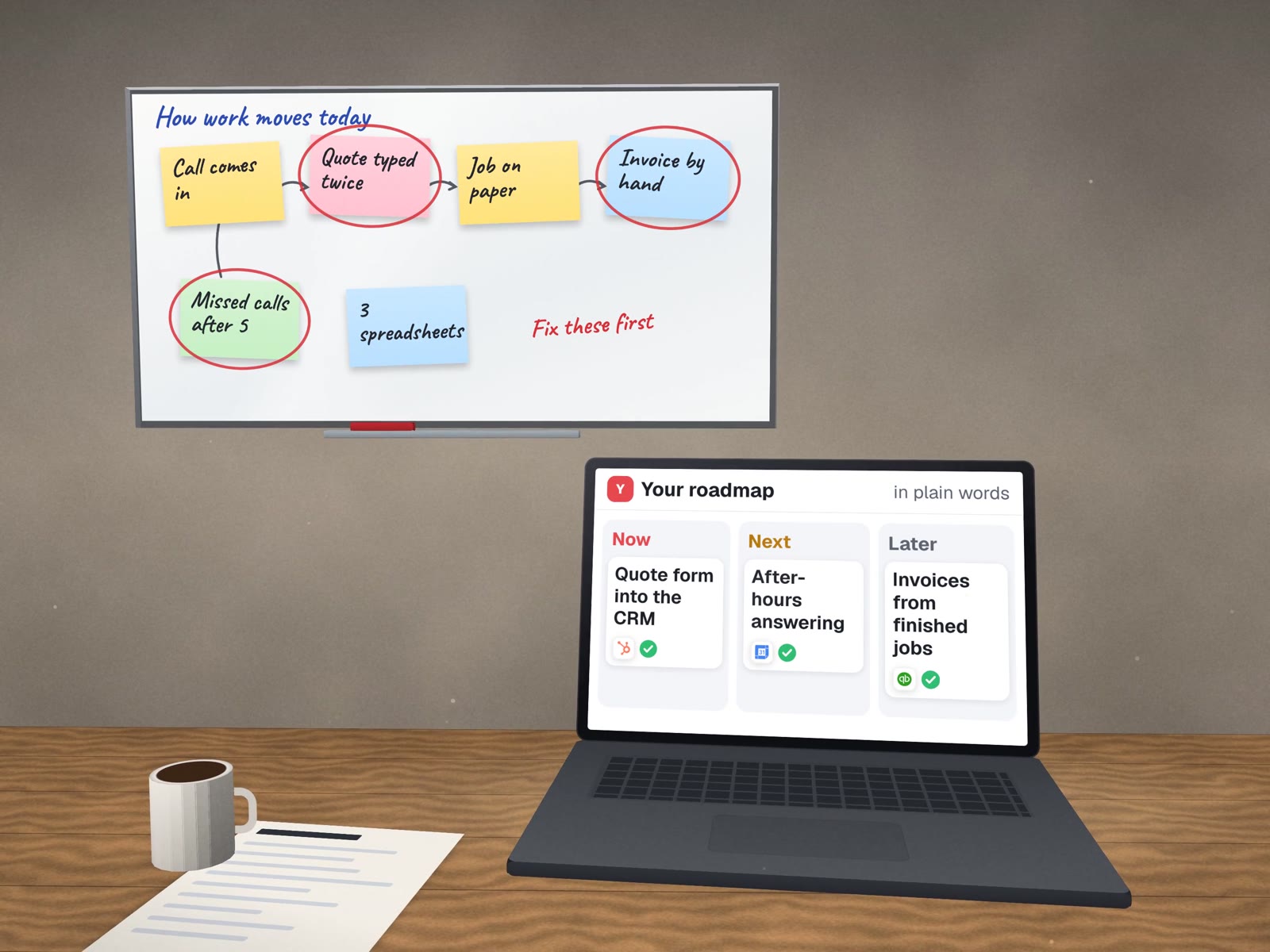
Nine services in three stages: decide, set up, stay.
Most owners come in with one question. Start at whichever stage matches it; nothing here requires the stage before.
Decide: know what to change
Findings in writing, so the decision does not depend on whoever argued loudest.
Set up: put the basics in place
Accounts, tools and habits set up properly once, in the company's name.
Stay: keep someone technical close
For the questions that keep arriving after the project is finished.
A question goes in. A written answer comes out.
Consulting is where the other six practices get pointed at the right problem. When something does need building, the plan hands straight over to them.
Decisions we have already made, and why.
Advice is cheap. These are calls we made for clients and for our own company, each one kept because it removed a step or a risk.
- Hook into printing, not a new screen
At a dental lab, a browser extension and a barcode system had both been tried for shipping labels and dropped, because each added a step. LabelBot works from the invoice staff already print.
- Card numbers never touch the site
A small store for a dental supply seller takes payment on Stripe's hosted checkout page, so the seller's own website never handles a card number.
- Use what the web host already offers
A sign shop's quote requests, artwork included up to 8 MB, go through the host's built-in forms. One fewer service to pay for and keep alive.
- Books where the company already works
Our own bookkeeping runs on Google Sheets with Apps Script: changes are booked by a script that refuses duplicates, and the workbook checks itself every day.
 Stripe hosted checkoutNetlify Forms
 Google SheetsApps Script
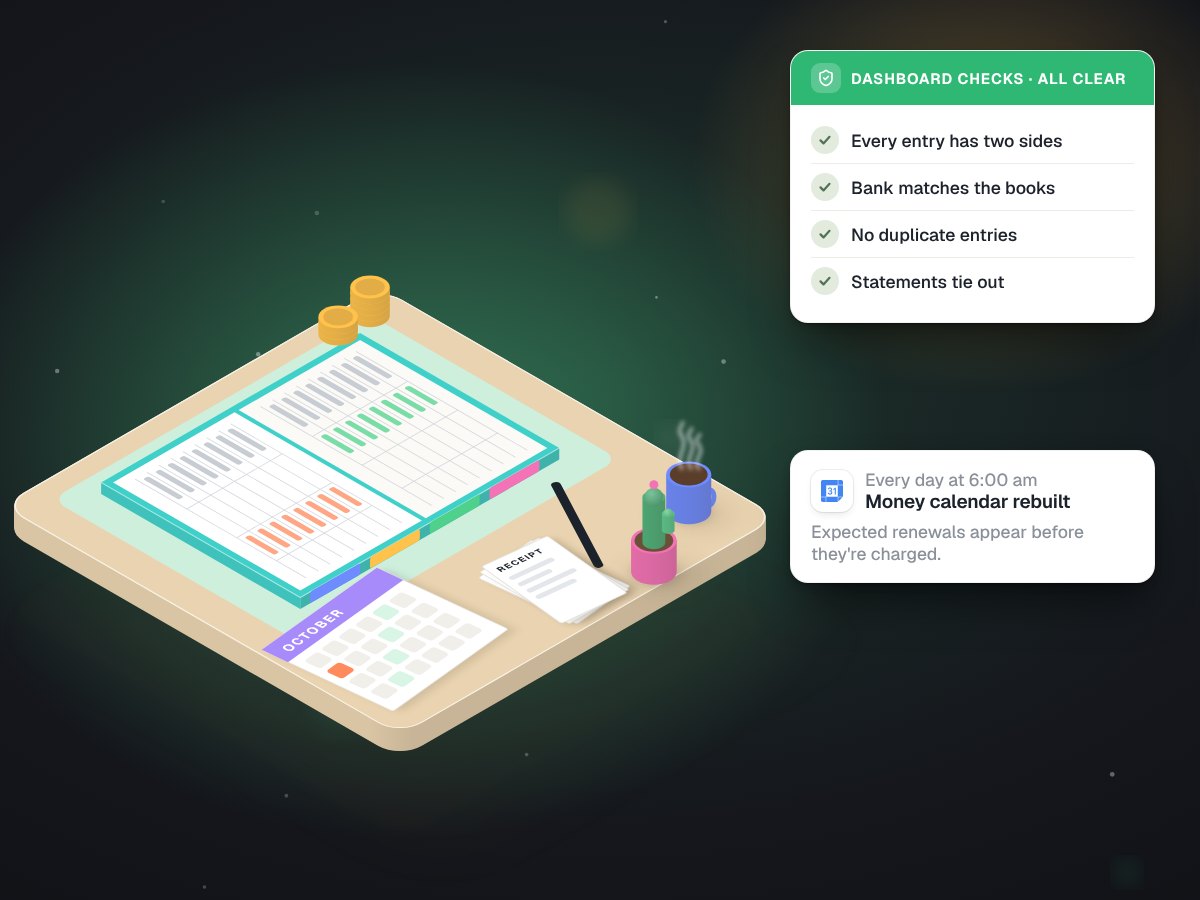
Books that check themselves
A Sheets and Apps Script workbook with daily checks and a payments calendar rebuilt each morning.
Built in-house
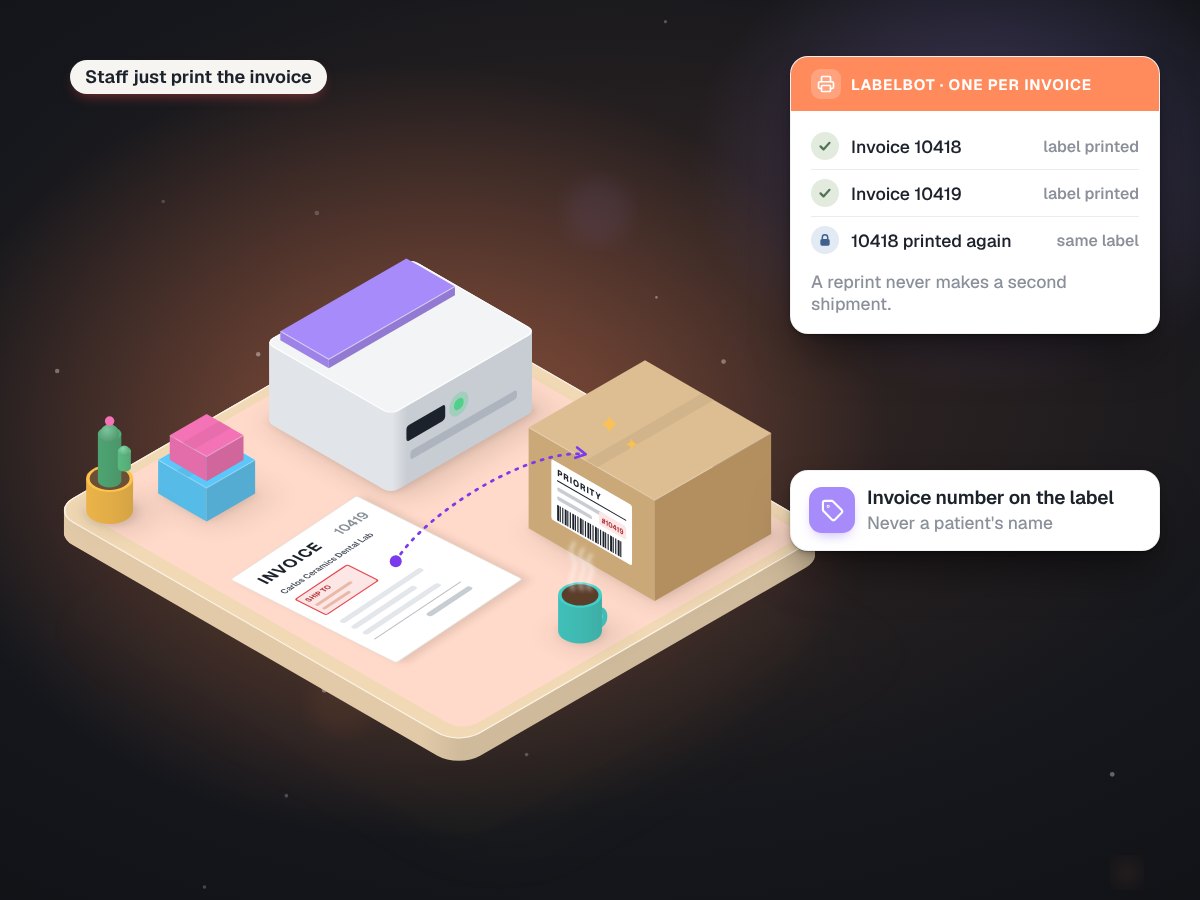
Courier access in the lab's own name
The courier account was registered to the lab, not to us, so the lab owns the access and the data.
Client work · Dental lab
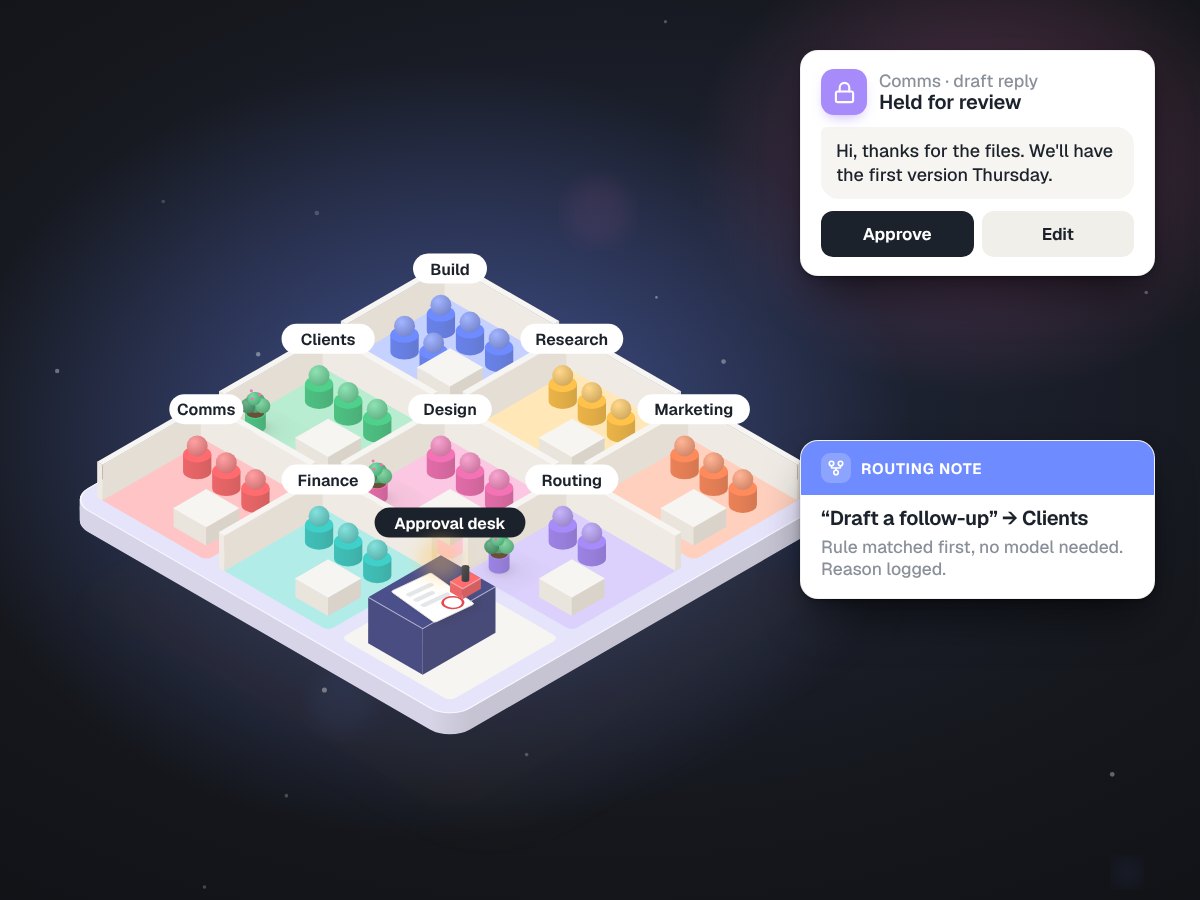
Our own operating system
Where our research on agent tools gets tested before it reaches a client recommendation.
Built in-house
Reading for the owner who has to decide
Checklists and lessons you can use before talking to anyone.

A 20-minute tool check you can do yourself
A card statement, a sheet of paper and three questions per tool.

Two fixes failed because each added a step
What a dental lab's shipping labels taught us about adoption.

Five signs you've outgrown spreadsheets
And what to move to when you have.
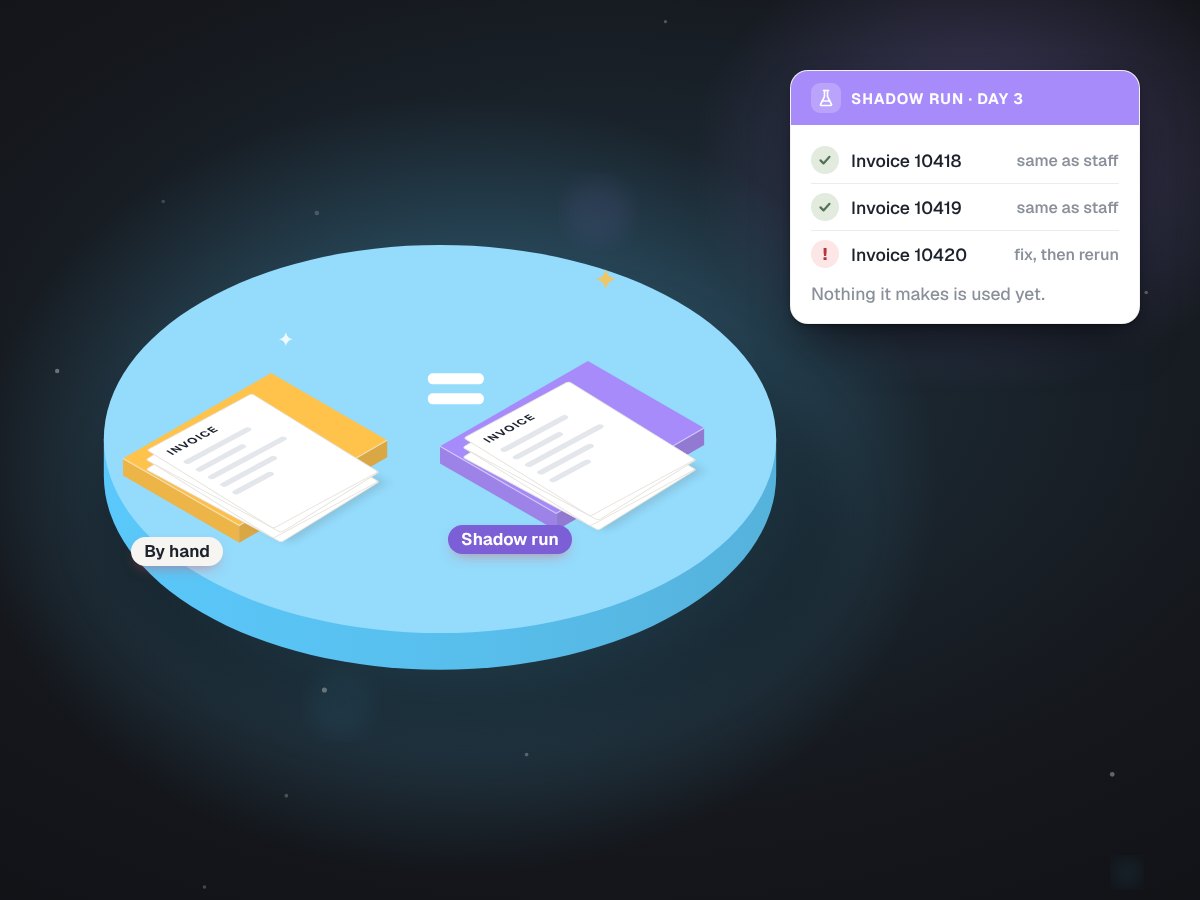
Test it on real paperwork first
How a shadow run works before an automation goes live.
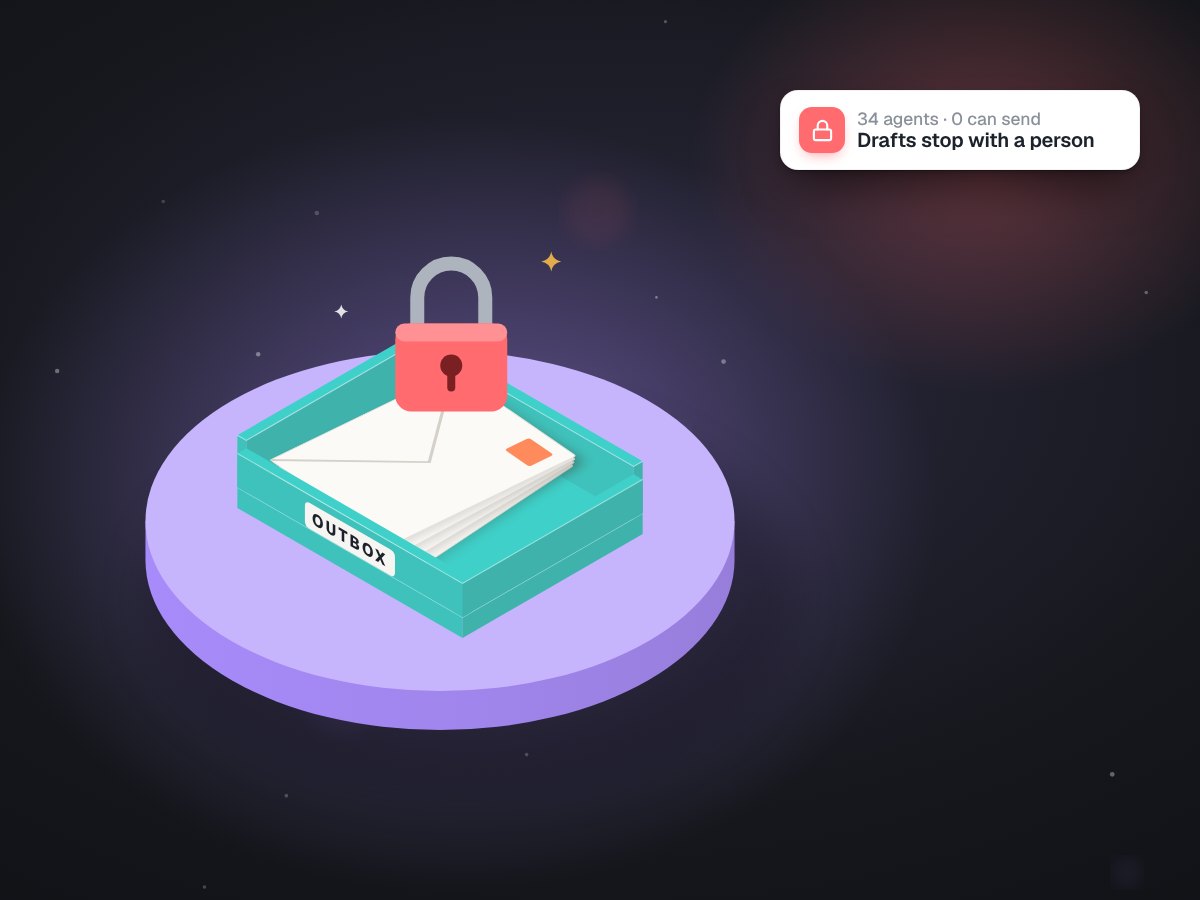
Why none of our 34 agents can send an email
The approval rules we run our own company by.
Any business with more tools than people to set them up.
Before you book the first call.
Are you a reseller or partner of the tools you recommend?
No. We are not a partner or reseller of any software vendor. Subscriptions are bought by you, in your company's name, and we explain why a tool fits before you pay for it.
What if the honest answer is not to build anything?
Then that is the answer you get, in writing. Often the fix is finishing the setup of a tool you already pay for, or changing one step in how work is handed over.
Can you work alongside our current IT person or agency?
Yes. We share the map, the tool list and the plan with whoever already looks after your systems, and agree who owns which part.
Is any of this legal advice?
No. When rules on privacy, consent or selling a product apply, we write them up in plain language and prepare a checklist for your lawyer. We are not lawyers and do not write your legal terms.
Bring the question you keep putting off. Leave with a plan.
The first conversation is free, and so is the preliminary plan that follows it.