A pipeline where "quote sent" means the same to everyone.
Most pipelines fail because nobody agreed what each stage means. We draw yours with a rule for leaving every stage, one owner per deal and a dated next step, then set it up in your CRM.
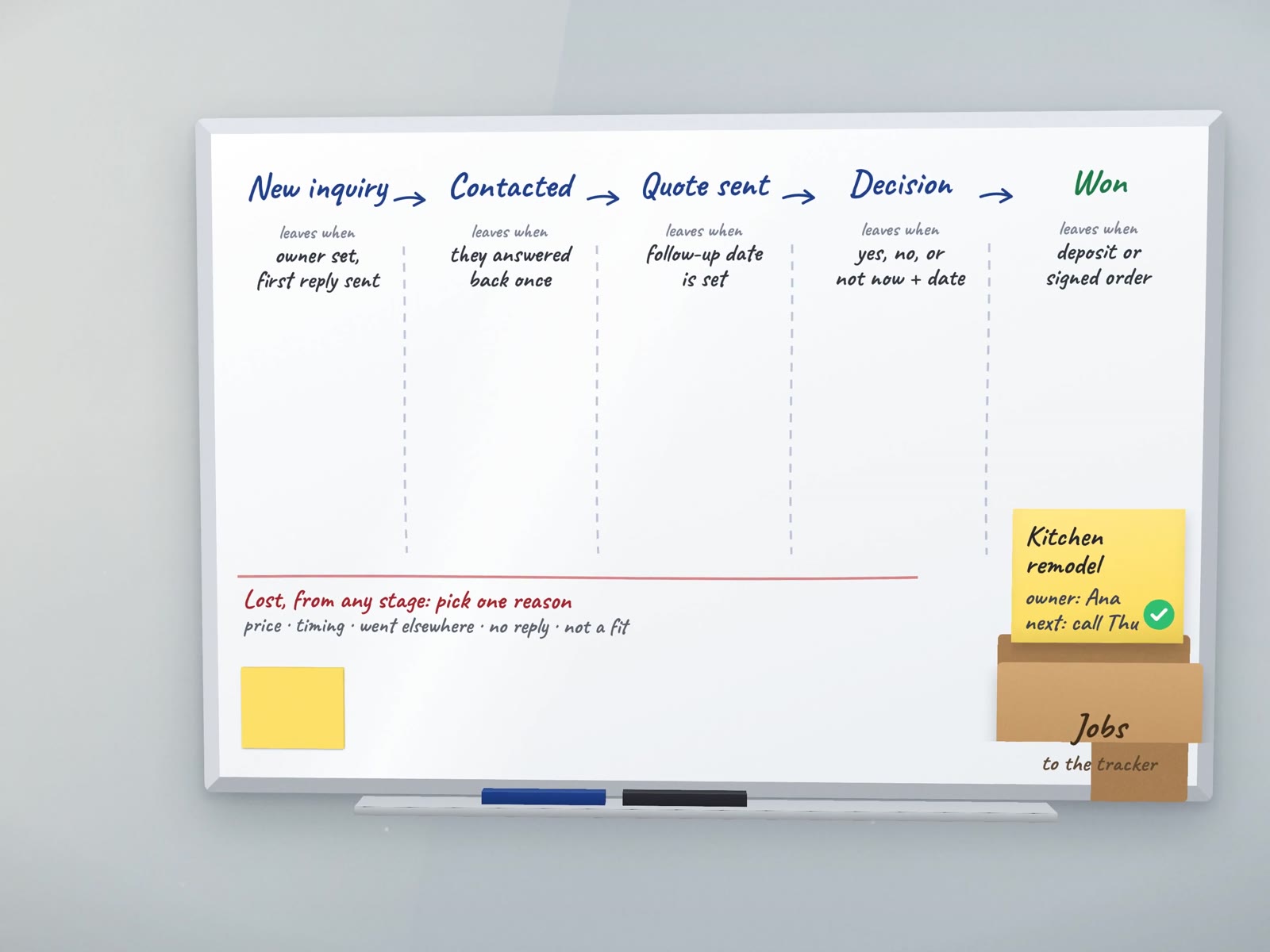
Stages, and the rule for leaving each one.
This is a starting shape for a business that quotes before it works, such as a contractor, an installer or a print shop. Yours gets your words and your rules.
Four rules, written down and built in.
One owner per deal
Not a team, a person. When someone is off, ownership moves on purpose, and the CRM records who moved it.
A dated next step, always
"Follow up" is not a next step. "Call Thursday about the second unit" is. Deals without one surface every morning.
Exit rules anyone can check
A deal moves when a fact is true, not when it feels further along. That keeps the forecast honest.
Lost reasons you can count
A short pick list, so after three months you can see whether you lose on price, on speed or on silence.
What moves itself, and what waits for a person.
| Event | Automatic | Waits for the owner |
|---|---|---|
| Web form arrives | Deal created, owner assigned by your rule | The first real reply |
| Quote sent from the CRM | Stage moves, follow-up task dated | What the follow-up says |
| No reply in your set window | Task appears in the owner's view | Whether to call, text or wait |
| Deposit paid | Moves to Won, job record created | Scheduling the work |
| Deal marked lost | Reason required before saving | Whether to try again later |
Anyone who quotes before they work.
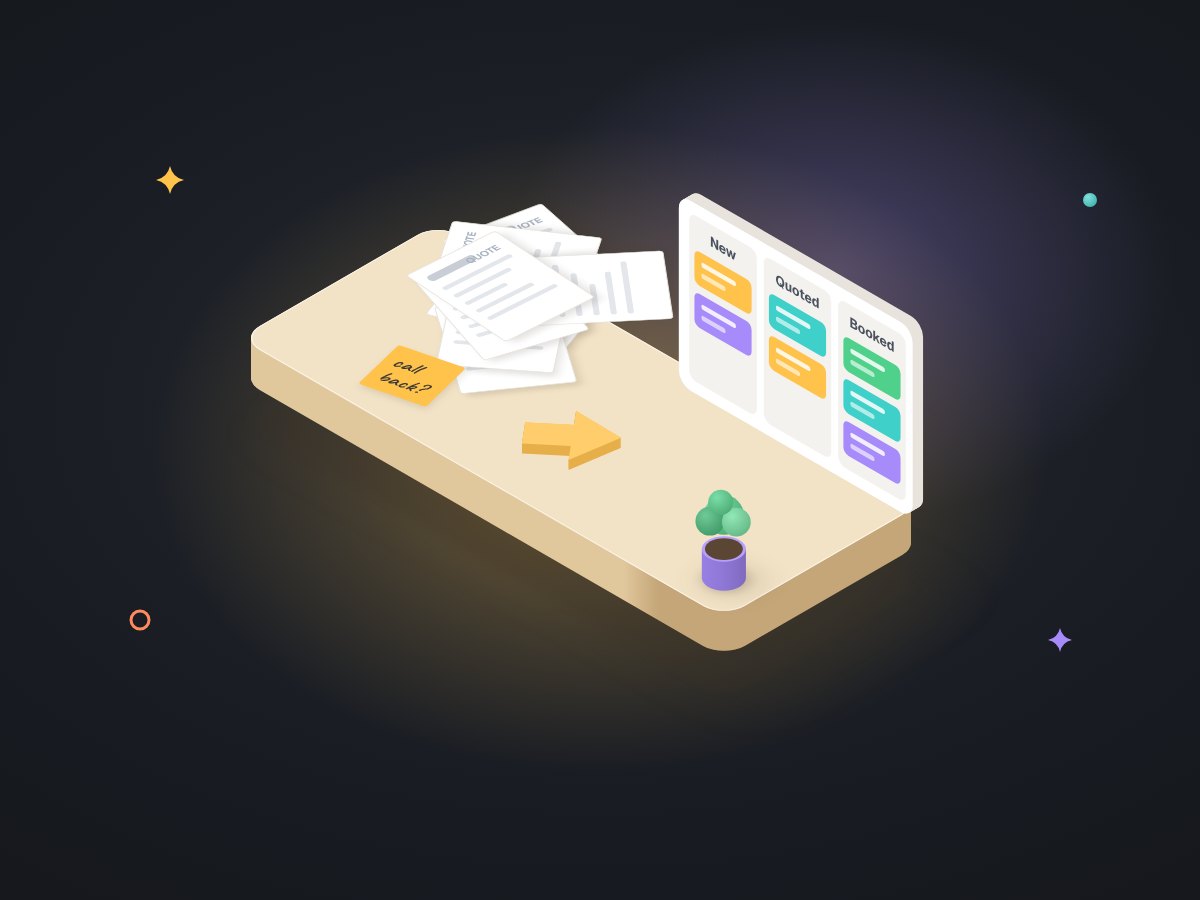
- Contractors and installersSite visits and quotes that sit for weeks.
- Print, sign and creative shopsProofs, approvals and deposits.
- Firms that sell engagementsProposals with long decisions.
- B2B suppliersNew accounts, samples and first orders.
Built for ourselves first.
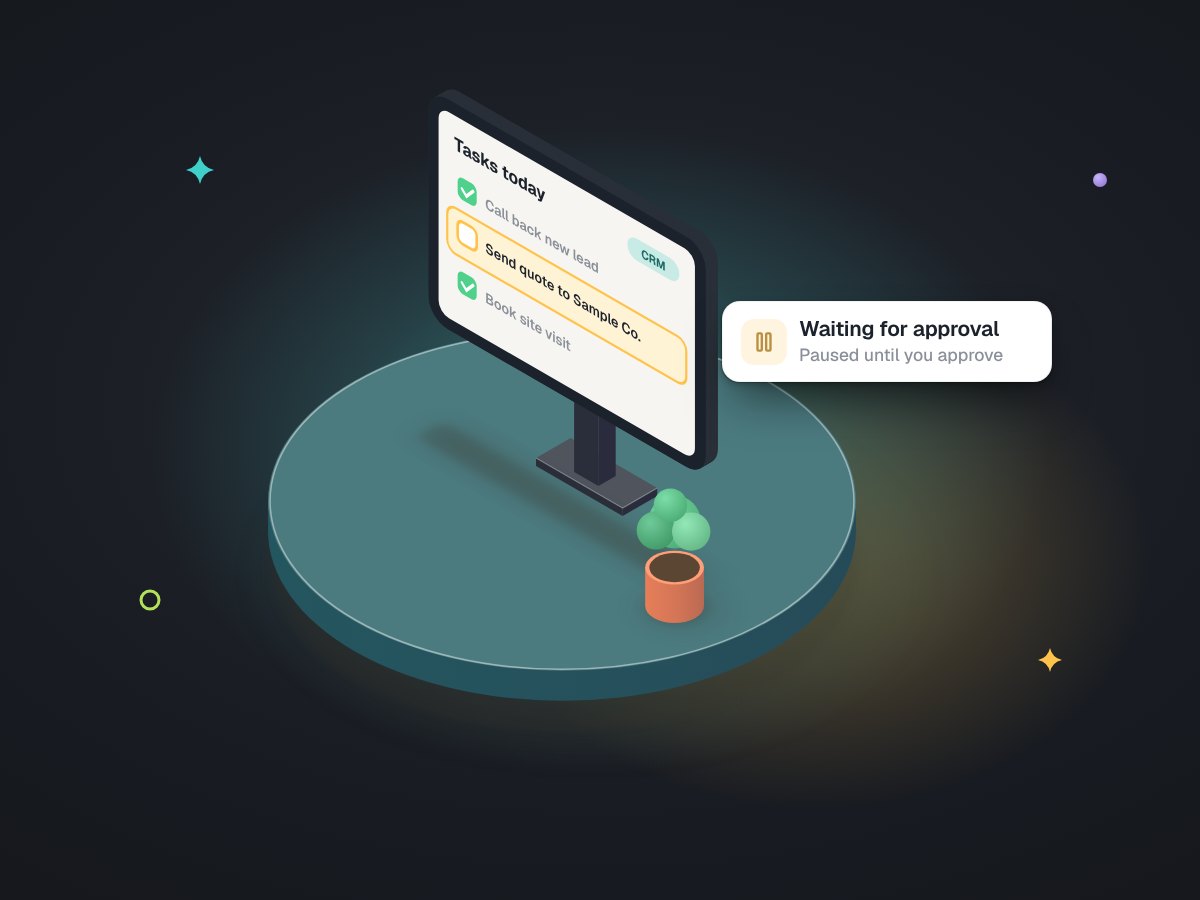
We run our own sales on a tracker built this way: every lead has an owner and a status, and follow-up to a client is a workflow that stays human-led on purpose. It was tested with fake rows and cleared before real use.
For a dental lab on GoHighLevel, we checked which of its existing automations could message customers without anyone looking. Three that could do harm were left switched off, and we found that the CRM's task list was the only built-in place to put a human approval step. That is now where we put one in every pipeline we design. We have not yet redesigned a client's whole pipeline; this page describes how we would.
About pipelines.
How many stages should a small business pipeline have?
Usually five to seven. Each stage must have a rule for leaving it that anyone on the team could check. If two stages share the same exit rule, they are one stage.
Should deals move between stages automatically?
Only on facts the system can see, such as a quote being sent or a deposit being paid. Judgement calls, like whether a customer is still interested, stay with the deal's owner.
What if our sales process is different for big and small jobs?
Then you may need two pipelines, or one pipeline with a size field that changes the follow-up rhythm. We decide from your last few months of real jobs, not from a template.
Around the pipeline
What feeds it and what comes after a win.
Speed to lead
The first stage, answered in minutes.
Order & job trackers
Where a won deal goes to get done on time.
Online quotes & booking
Inquiries that arrive with the details already filled in.
A bilingual quote builder
Product, quantity, placement and artwork in one request.
Workflow mapping
Draw how work really moves before you build anything.
Bring your last ten quotes. We'll draw the pipeline from them.
A free call, and a drawing you can keep whether or not we build it.