From site visit to signed estimate, without the retyping.
A job starts as a call or a plan set, becomes a site visit, an estimate in a spreadsheet, a signed proposal, and then weeks of change orders, supplier orders and progress invoices. The facts behind it sit in five places at once.

Custom software, at work.
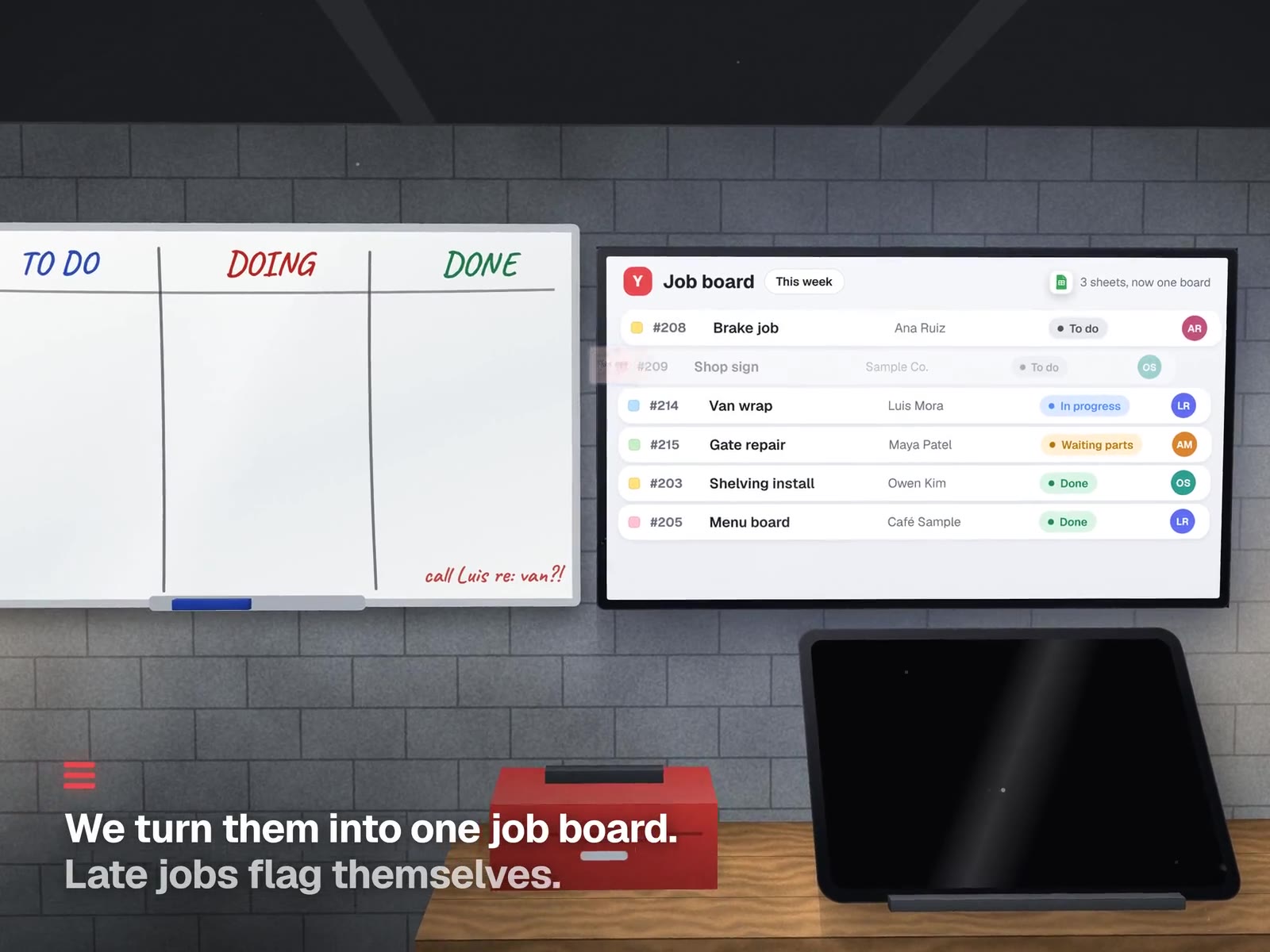
Where a contractor's information lives today.
Sound familiar on the job?
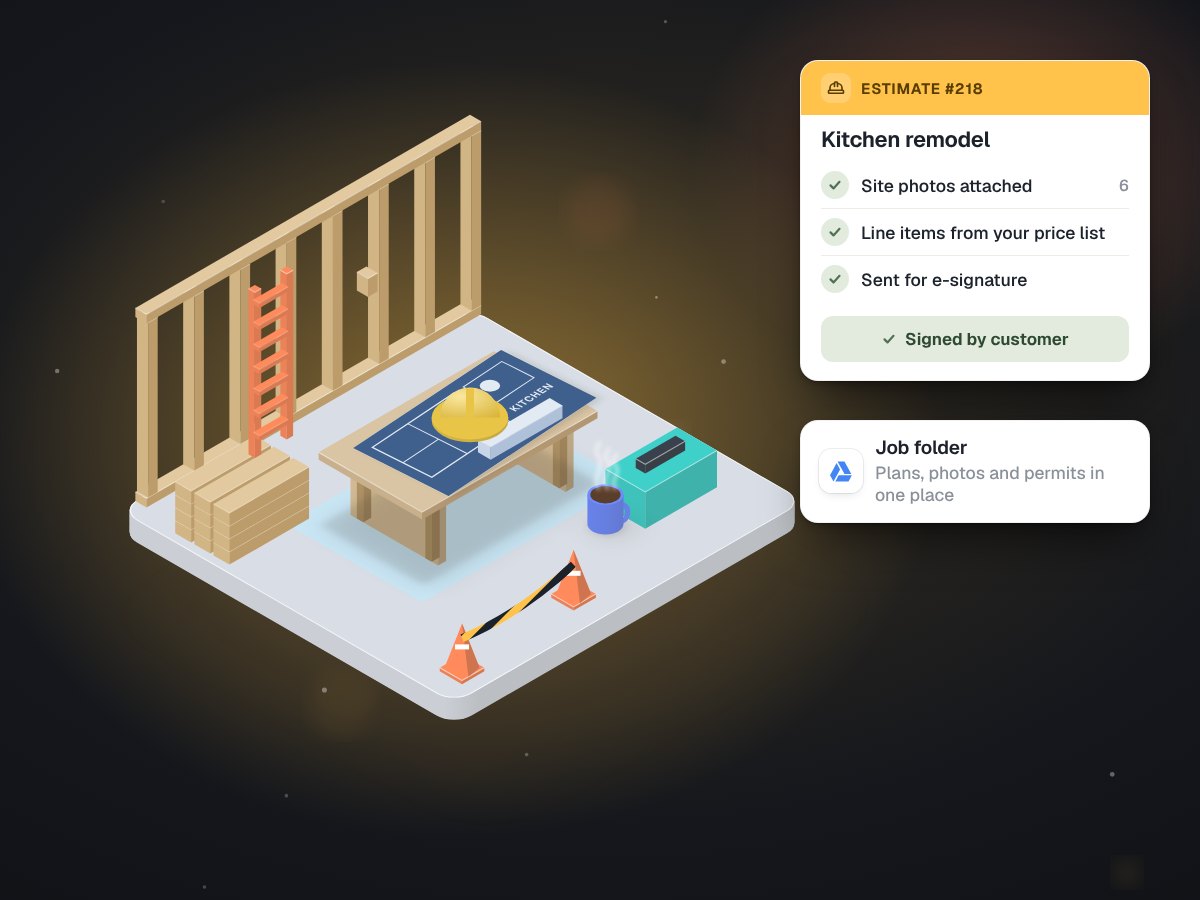
- Estimates after dark"I write estimates at the kitchen table after the crew goes home."
- Unwritten change orders"The change was agreed on site. Nobody wrote it down, so nobody paid for it."
- Plans in pieces"Plans come in as twelve attachments across four emails."
- Photos lost in texts"My crew texts me photos and I can't find them when there's a dispute."
- Bids nobody chased"We bid jobs and never follow up on the ones we didn't hear back on."
- Lapsed certificates"A sub's insurance certificate expired and we found out at inspection."
Small pieces on the dashed lines.
If you already run Buildertrend, JobTread, Procore or QuickBooks, we build around it. If you run on spreadsheets, we may suggest a tool before we build anything.
 QuickBooksXero
One remodel, five days.
Monday: the request arrives complete
The homeowner's form has the address, rough measurements, photos and budget range. You walk in knowing what you're pricing.
Tuesday: a change order, signed in the driveway
The client wants a second outlet run. Your lead adds it on the phone, the client signs, the price lands on the job.
Wednesday: the supplier invoice matches itself
The PDF is read, matched to the job and the line items, and anything over the quote is flagged for you.
Thursday: a certificate about to lapse
The board shows a sub's insurance expiring next week, so the office asks for the new one before anyone is on site.
Friday: the draw goes out
The milestone is marked done with photos. The progress invoice is drafted, you check it, it's sent.
A print shop's quote builder, aimed at a job site.

We haven't built for a contractor yet. The closest build is the quote builder for Conception Design, a sign and print shop: customers choose what they need, how big and how many, mark where the design goes on a diagram and attach their files, up to 8 MB per request. Swap "where does the logo go" for "mark the wall on this photo" and it's a contractor's project request.
The books we built for ourselves (books that check themselves) run daily checks in Google Sheets and refuse duplicate entries. Job costing in Sheets can work the same way.
 Google Sheets
From the trades.
Do you do takeoffs or engineering?
No. We don't measure plans or size systems. We speed up the paperwork around your estimate, so your estimator spends the time on the numbers.
Will my crew actually use a phone app?
Only if it's quicker than texting you. We keep field screens to a few taps, test them with one crew first and cut anything they skip.
Still estimating at night? Let's start there.
The first call is free. Walk us through one job from call to final invoice.