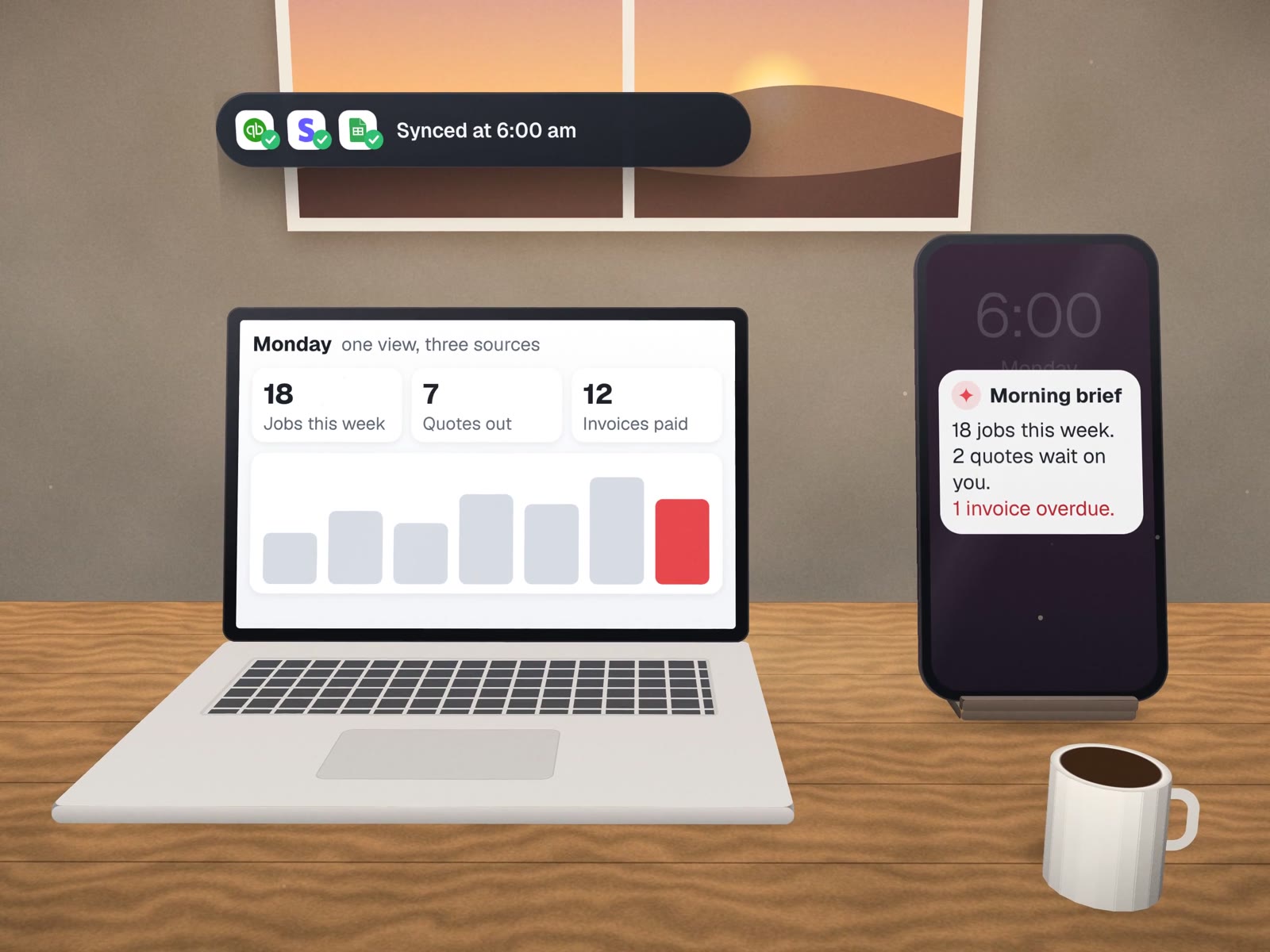
Know how the week went before you open a single app.
By cleaning the records you already keep, defining each number in writing and delivering it where you already look, we help owners answer "how are we doing?" in a minute instead of an afternoon.
Six services, six questions owners ask.
Each one starts from a question you already ask out loud. The service is whatever answers it reliably, every time.
Owner dashboards
Sales, jobs and cash on one screen, each number with a written definition.
"Are we on track this month?"
Owner dashboards →Morning briefs & reports
The numbers, deadlines and exceptions, delivered before you ask.
"What do I need to know today?"
Briefs & reports →Customer history analysis
Each customer judged against their own rhythm, not one rule for all.
"Who stopped ordering?"
Customer analysis →Data cleanup & one source of truth
Duplicates merged, conflicts settled, every change logged.
"Which list is right?"
Data cleanup →Call & chat review
Conversations tagged and counted, so fixes target the real questions.
"What do customers keep asking?"
Call & chat review →Knowledge base build-out
What lives in people's heads, written down and searchable.
"How do we do this again?"
Knowledge bases →What "good data" looks like on a Monday.
Four numbers, one trend, a short list of things that need a person, and a line saying where it all came from and when. Built in HTML here to show the idea; every figure is sample data.
- 2 invoices past 45 days
- 8 leads with no reply after 24h
- A regular customer is late on their usual order
Updated 6:02am · from accounting and CRM · one source failed? It would say so here.
Clean once, then answer many questions.
Dashboards and briefs are only as good as the records under them. That is why cleanup sits in the middle of the picture, not at the end of the project.
Where these methods come from.
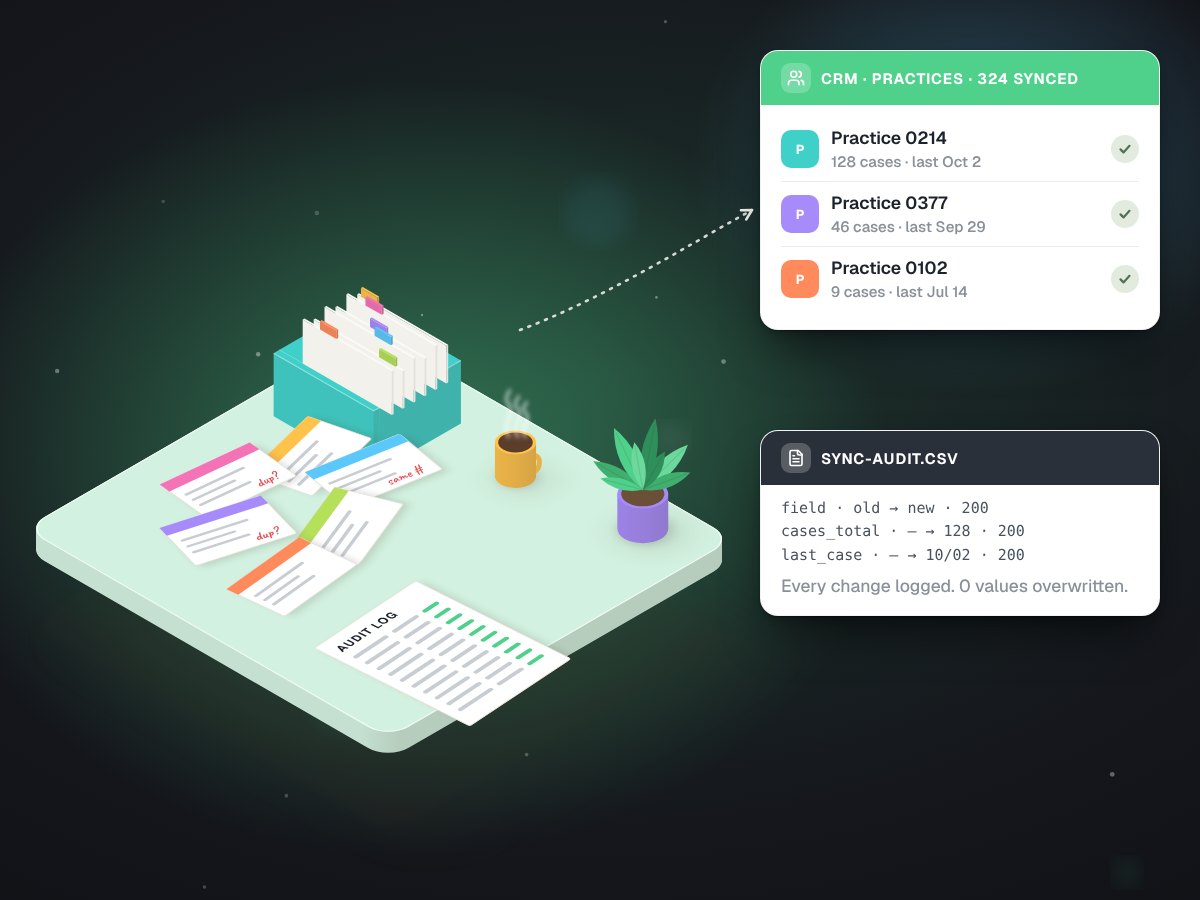
25,336 cases read to learn each customer's rhythm
For Carlos Ceramics Dental Lab: aggregates only, every practice judged against its own ordering pattern, then synced into the CRM with an audit trail.
Client work · Dental lab
Read the case →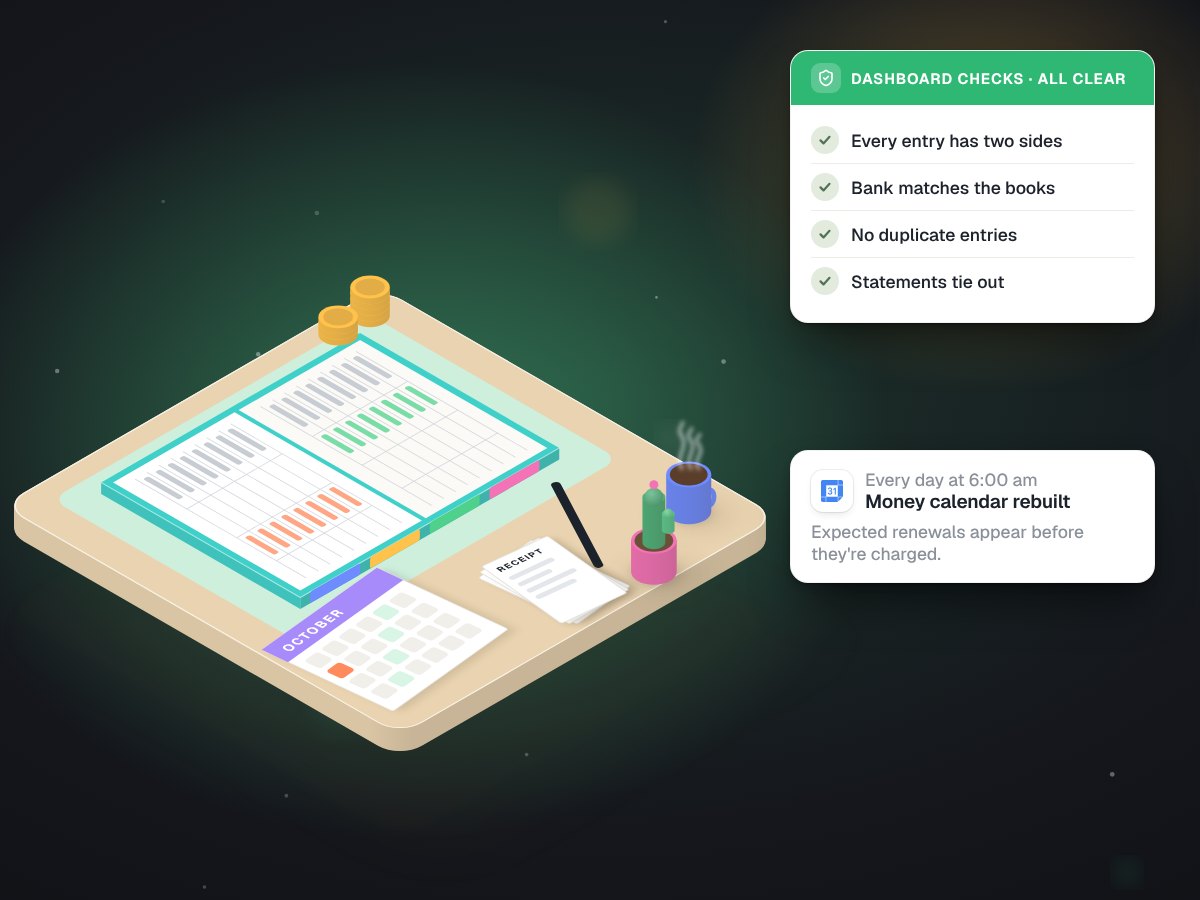
A workbook that checks its own numbers
Our books in Google Sheets: a checks panel, a daily expected-bills job and a payments calendar written every morning.
Built in-house
See the system →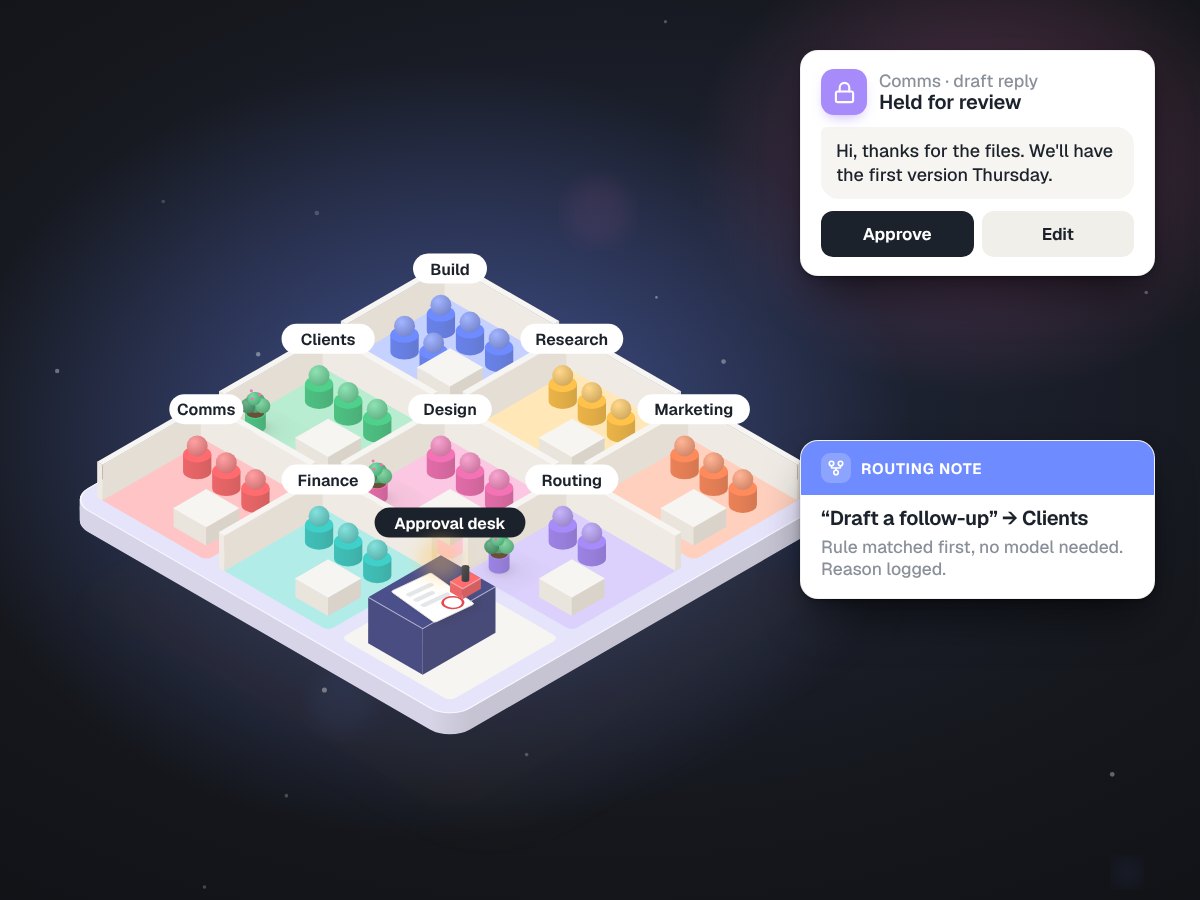
A morning brief that invents nothing
Our operating system's home screen: calendar, deadlines and open incidents, with real usage read from the source, never estimated.
Built in-house
See MUVES OS →Writing on data and reporting
Practical checks before you buy a dashboard tool or trust a number.
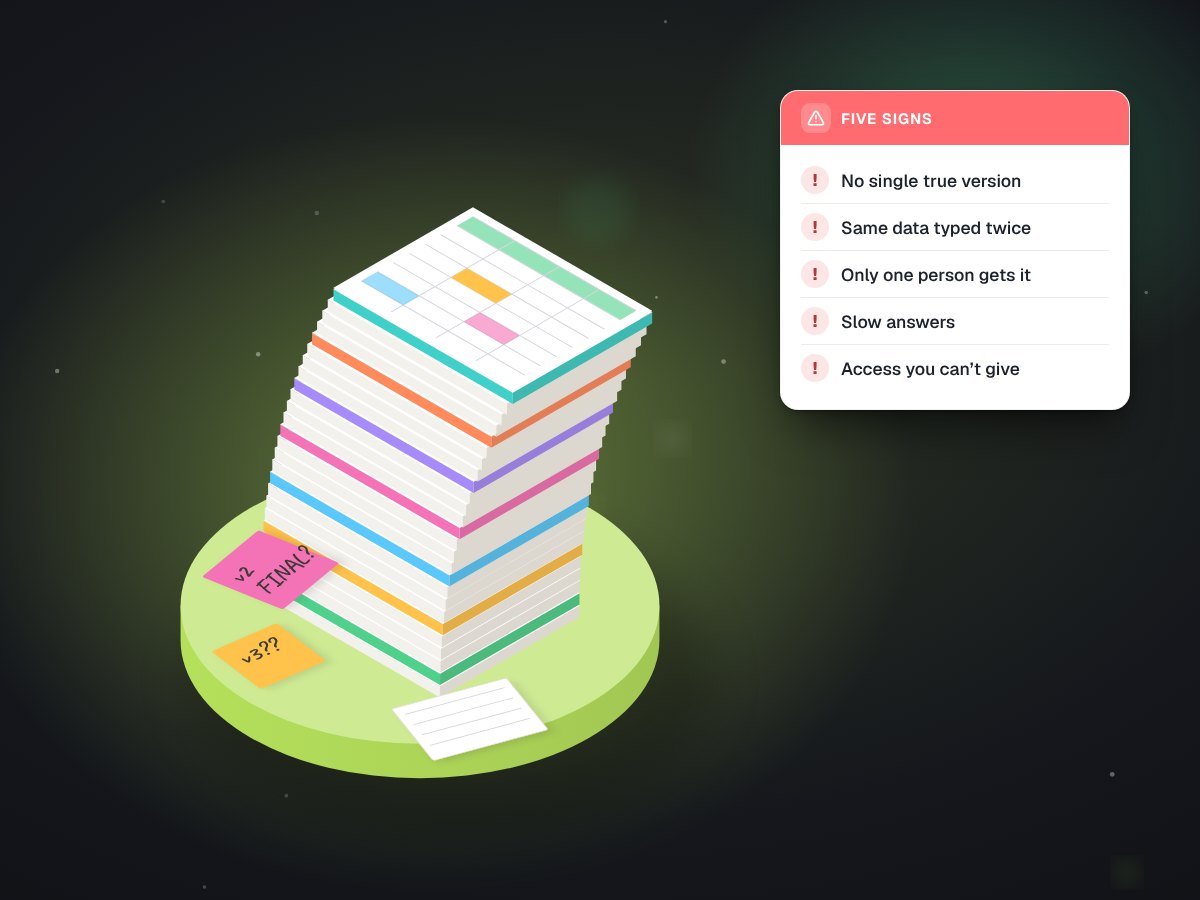
Five signs your business has outgrown spreadsheets
And when a sheet is still the right answer.
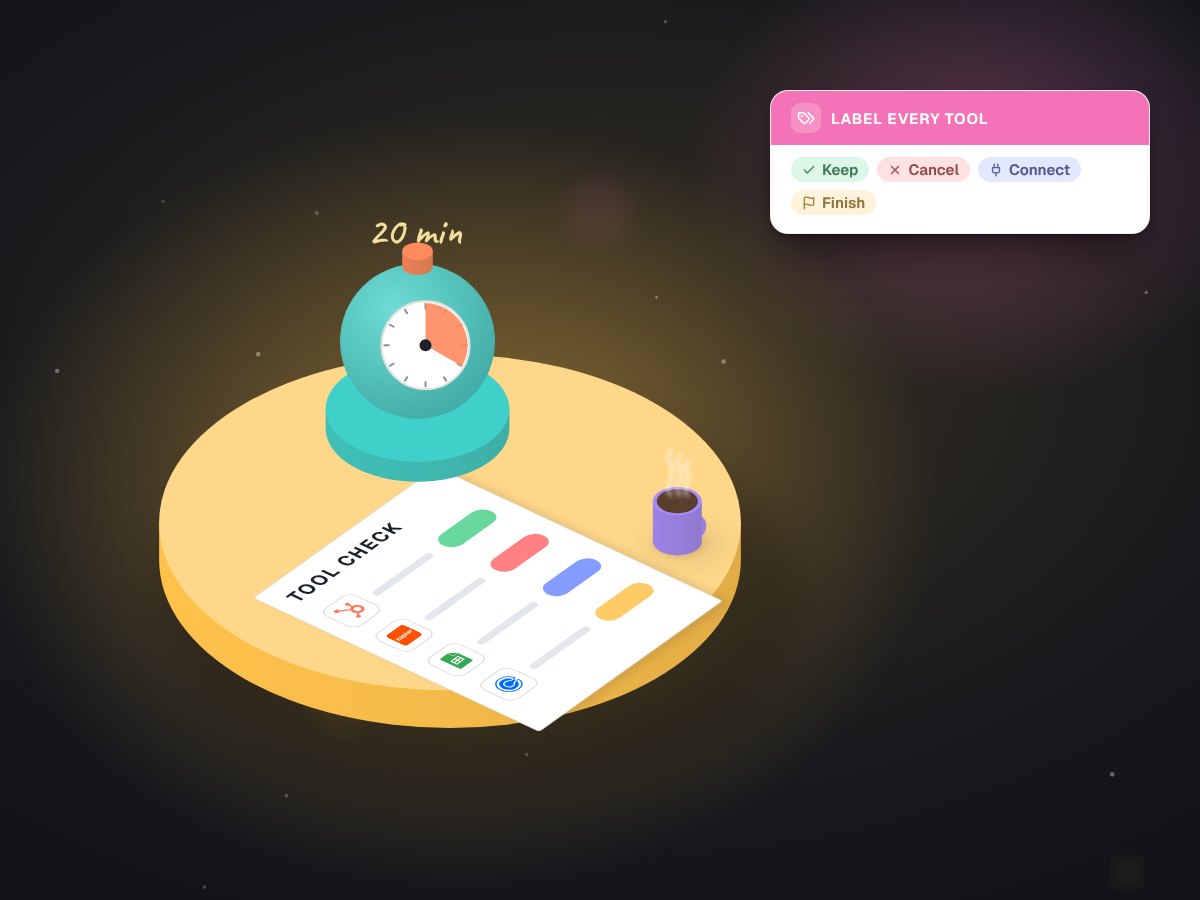
A 20-minute tool check you can do yourself
Where your numbers live today.

Two people, 34 AI agents, and none can send an email
Including the morning brief we read daily.
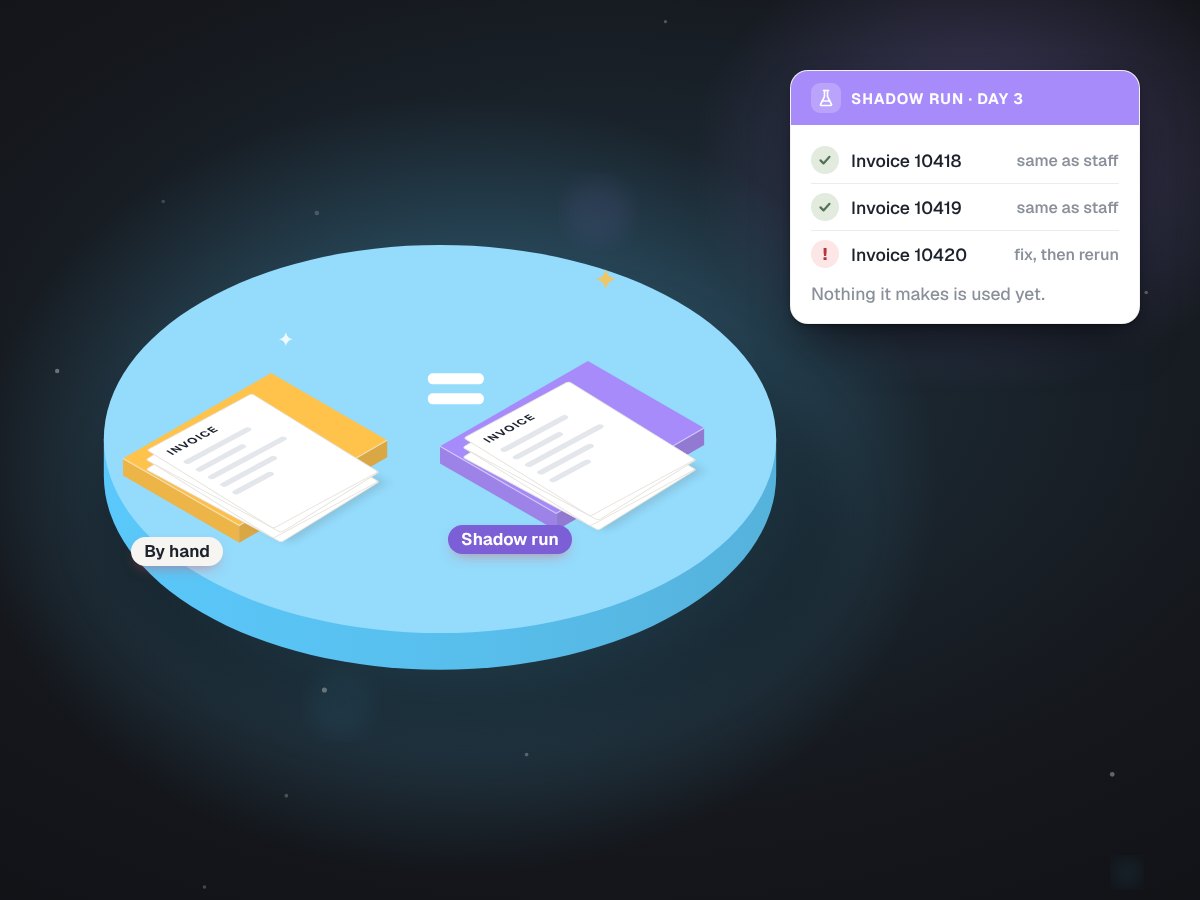
Test on real paperwork first
The same rule applies to reports.
Wherever the answer is in the records already.
Before you trust a number.
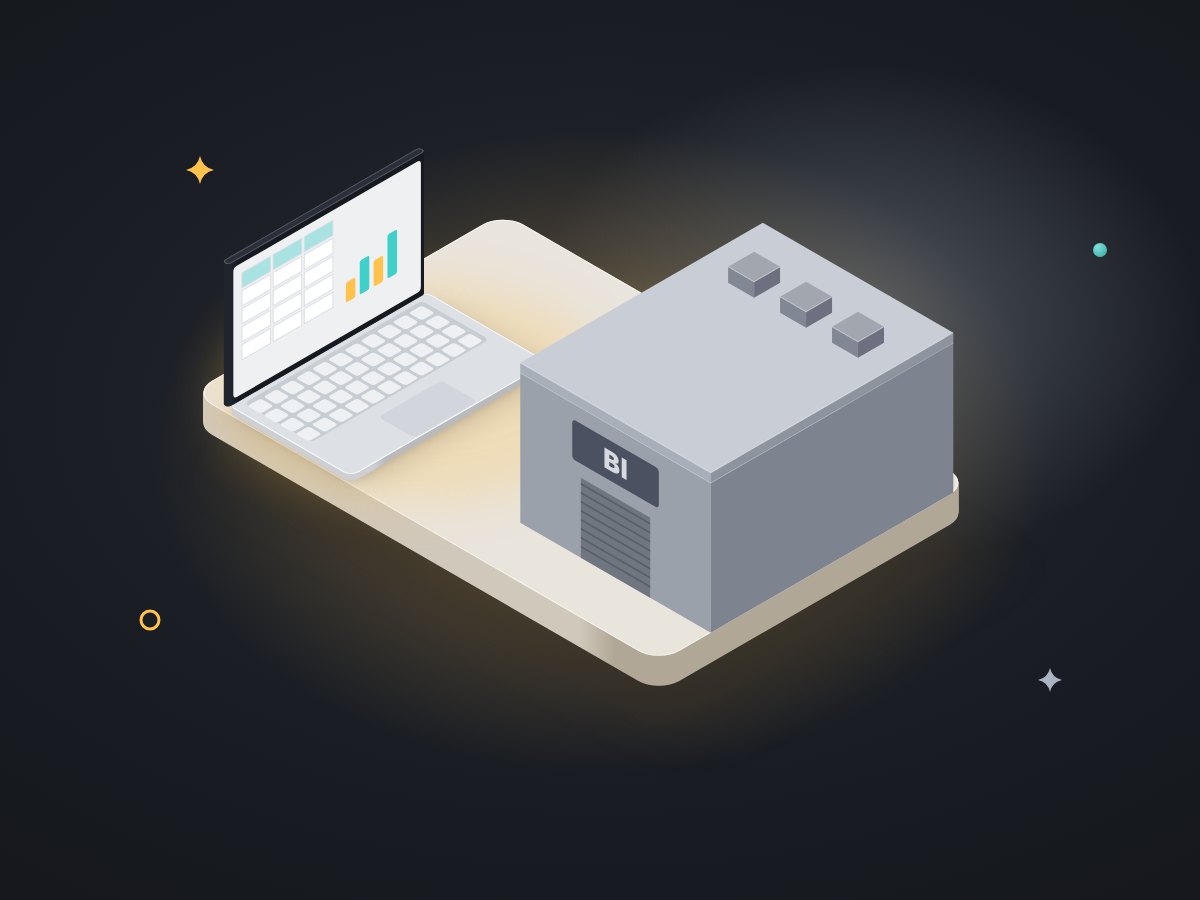
Do we need a data warehouse or a BI tool?
Most small businesses do not. A well-built Google Sheet, a scheduled script and a morning email answer most weekly questions. We move to a dedicated tool only when the data or the team outgrows that.
How much history do we need before analysis is useful?
For customer rhythms, roughly a year of orders is a good start, and at least a month per customer before calling anything a trend. With less, we say which questions the data can and cannot answer.
Can you work with exports instead of logins?
Yes. A one-off analysis often starts from exports or a system backup. Ongoing dashboards and briefs need a read-only connection so they stay current.
Will our data be used anywhere else?
No. We work on copies, keep only the fields the questions need, and leave out card numbers and health details. Figures only appear in our case studies with your approval.
What question do you answer by hand every week?
Bring it to a free call. We will tell you where the answer lives and how it could arrive on its own.