See how a job really moves, from first call to paid.
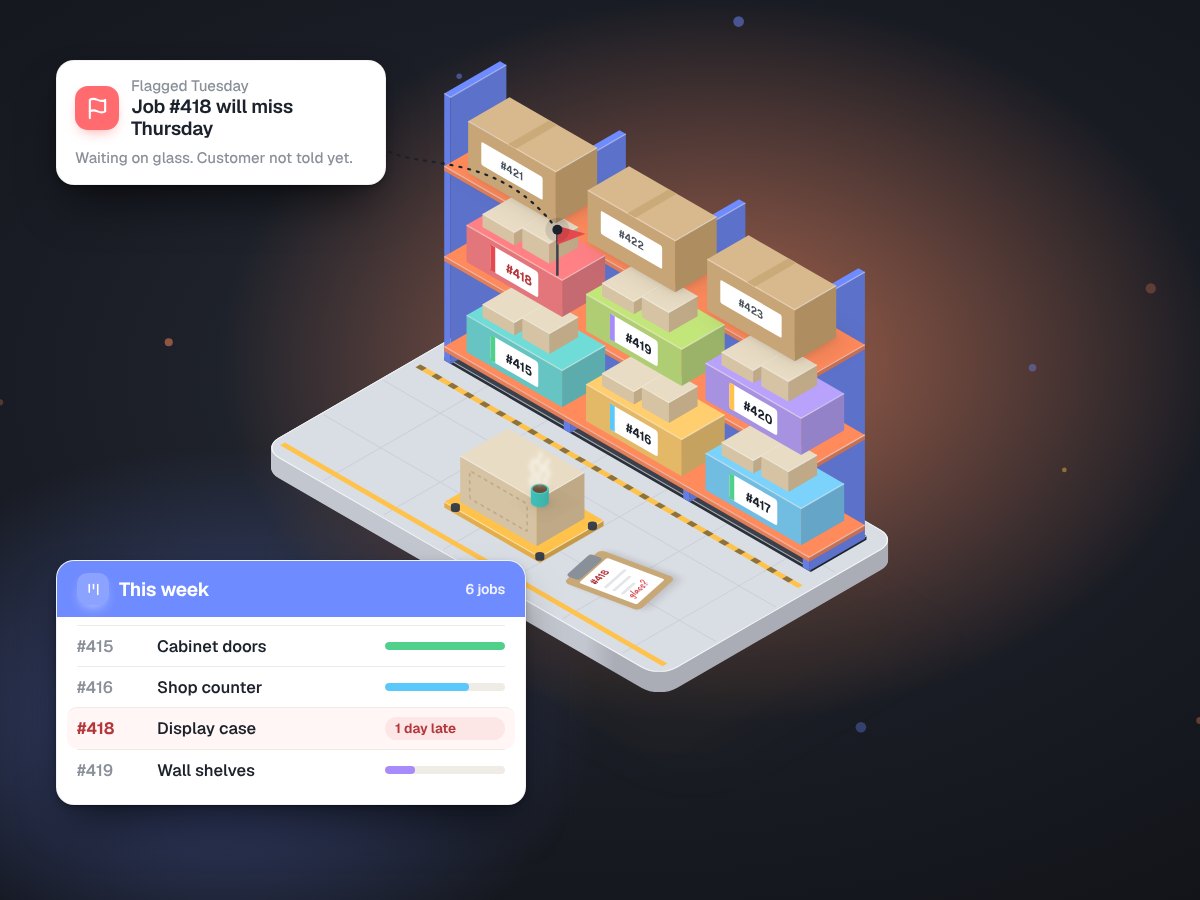
Most owners can describe the process. Few have watched it. We come on site, follow real jobs through every inbox, notebook and screen, and draw what happens on a single page, with each slow spot marked.
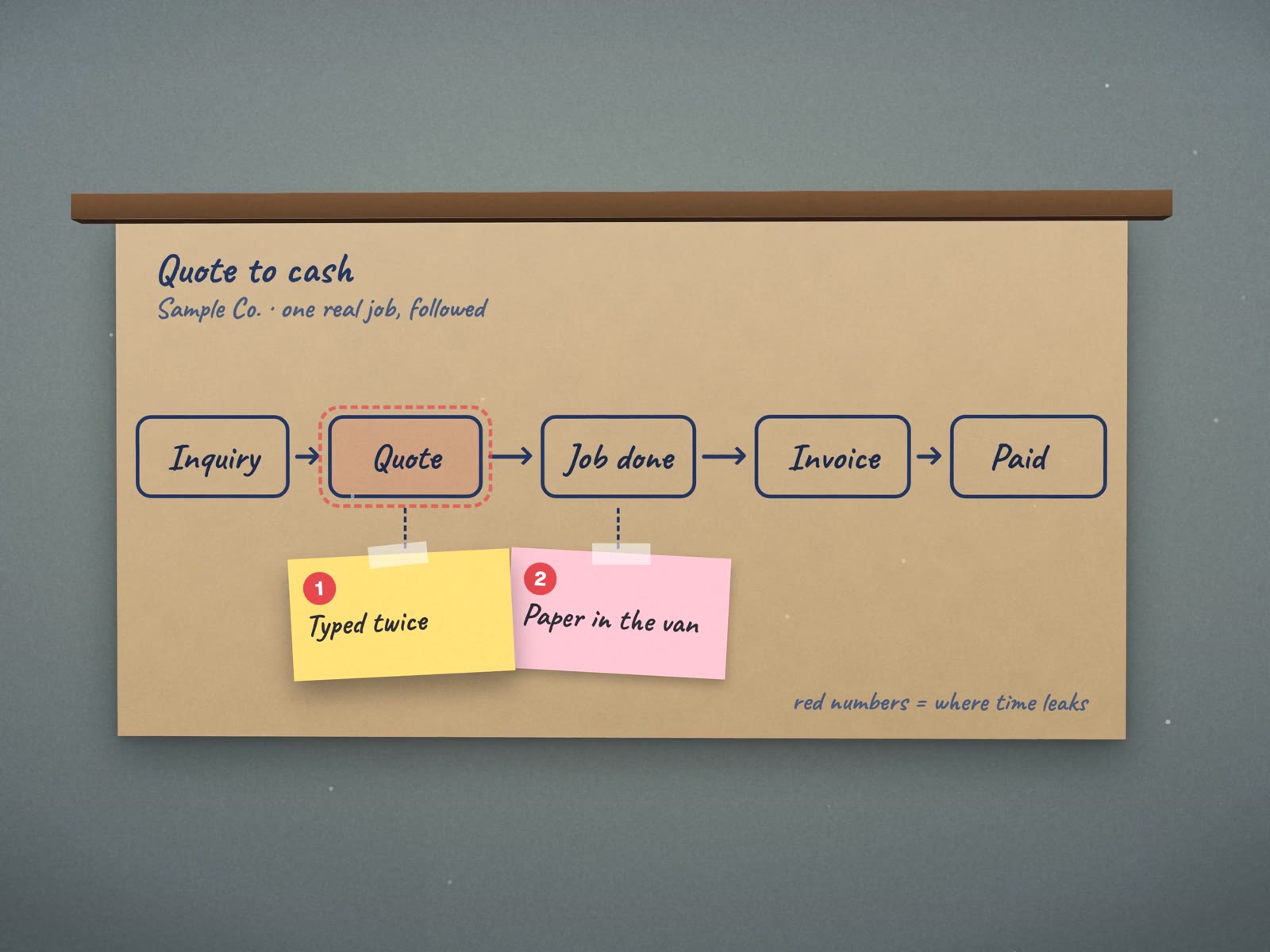
Quote to cash at a made-up installation company.
Seven steps, four people's desks, four places where time leaks. Generic example, drawn the way we draw yours.
- Typed twiceThe inquiry goes into a notebook, then into the quote. Details drift between the two.
- Waiting in one inboxThe customer's yes sits in whoever sent the quote. If they are out, the job waits.
- Paper in the vanThe signed sheet is photographed and retyped back at the office, sometimes days later.
- Payments matched by eyeDeposits are matched to invoices by scrolling a bank statement at month end.
A phone call, then a short visit on site.

It starts with a call about where the business feels slow. Then we ask for 20 to 30 minutes at your place of work, at a normal busy time rather than a quiet one.
During the visit we watch, we do not interview. We follow one or two live jobs, ask the person doing each step what they type, where it comes from and who waits for it, and photograph the paper forms (never customer details).
We have offered exactly this to an installation business: a call, then a visit to follow work from the customer's first inquiry through production to delivery. It is the cheapest way to find what a written process leaves out.
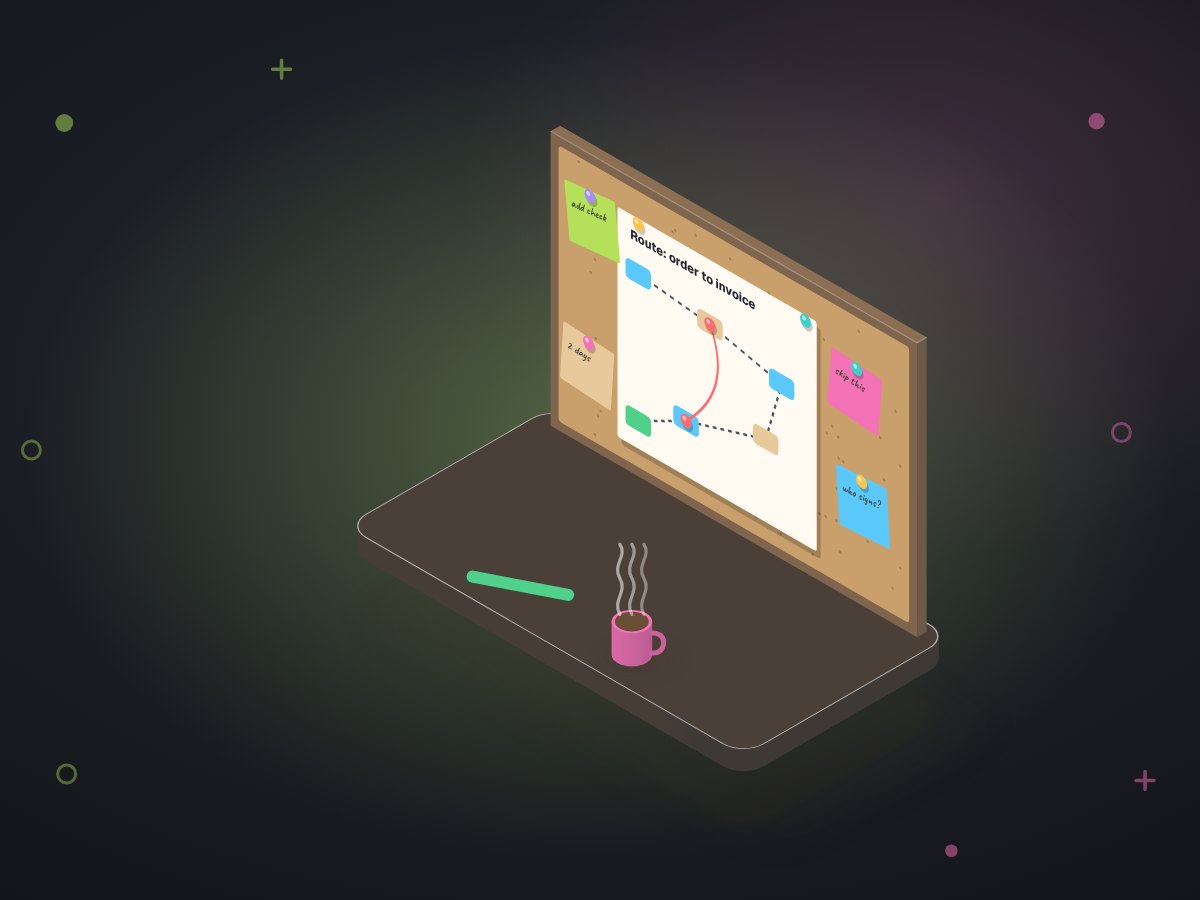
A map you can pin to the wall.
The one-page map
Every step, who does it and in which tool.
Each pain point numbered
With what it costs in waiting or retyping.
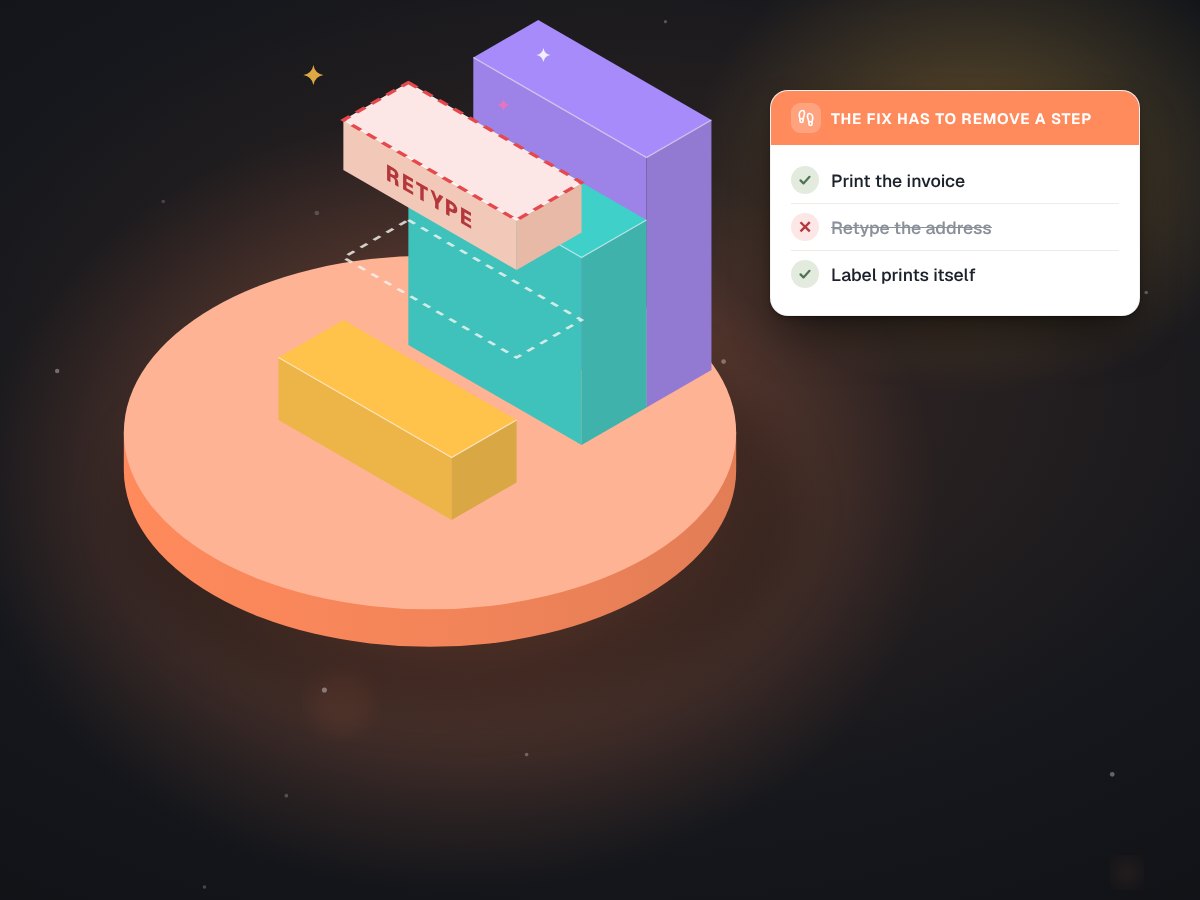
The first two or three fixes
And which need no software at all.
A clean copy to correct
Your team marks what we got wrong.
Any business where a job changes hands.
- Installers and tradesInquiry, site visit, quote, crew, sign-off, invoice: six handoffs before you are paid.
- Print and sign shopsArtwork, proofs and approvals bouncing between email and the production floor.
- Labs, makers and distributorsAn order passes intake, production, packing and shipping, often in separate systems.
- Clinics and practicesBooking, intake forms, follow-ups and billing split between front desk and back office.
- Home servicesCalls, dispatch and payment collected in the driveway.
A map, not a verdict on your staff.
- It does not grade people. Slow spots are almost always about handoffs, not effort.
- It does not come with a software pitch attached. Some fixes are a shared inbox rule or a changed form.
- It does not need your customer records. We map the route a job takes, not who the job was for.
After the map
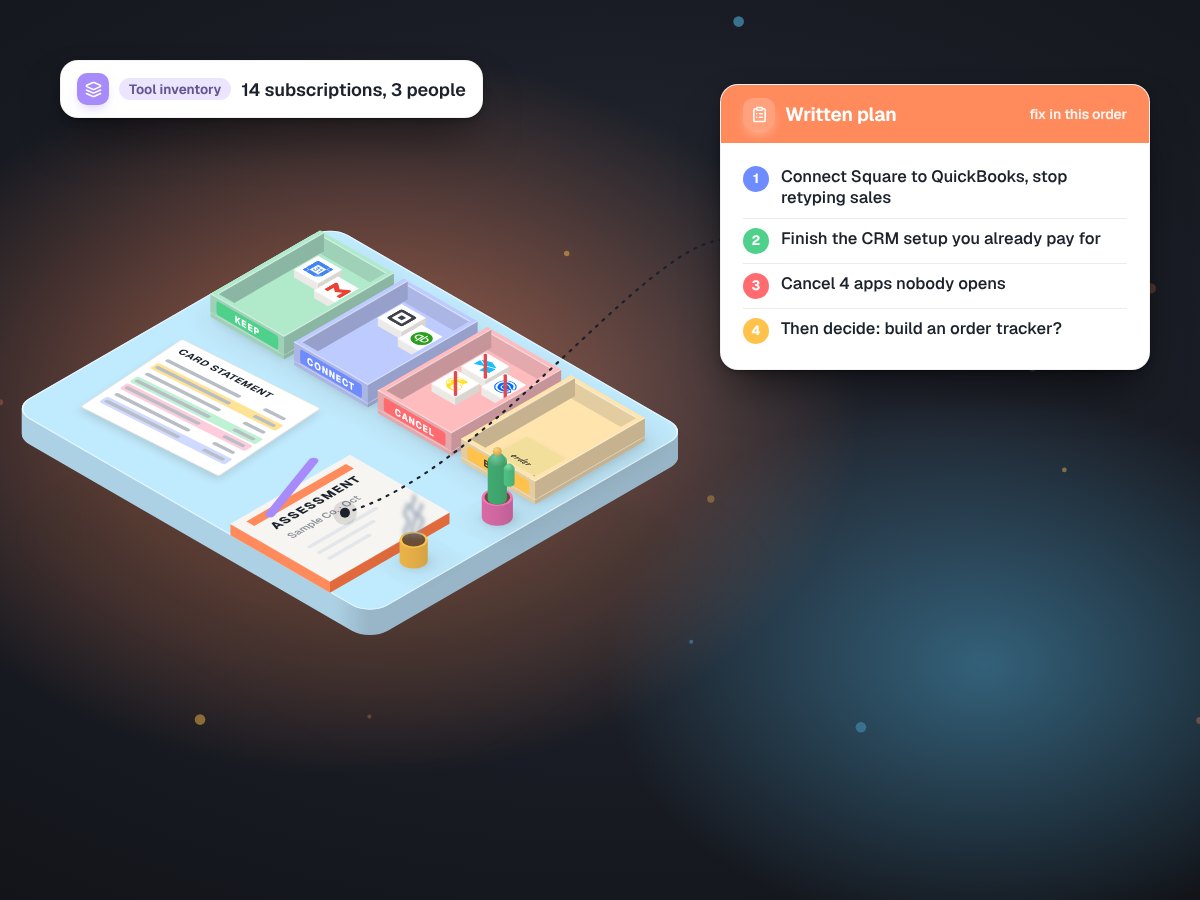
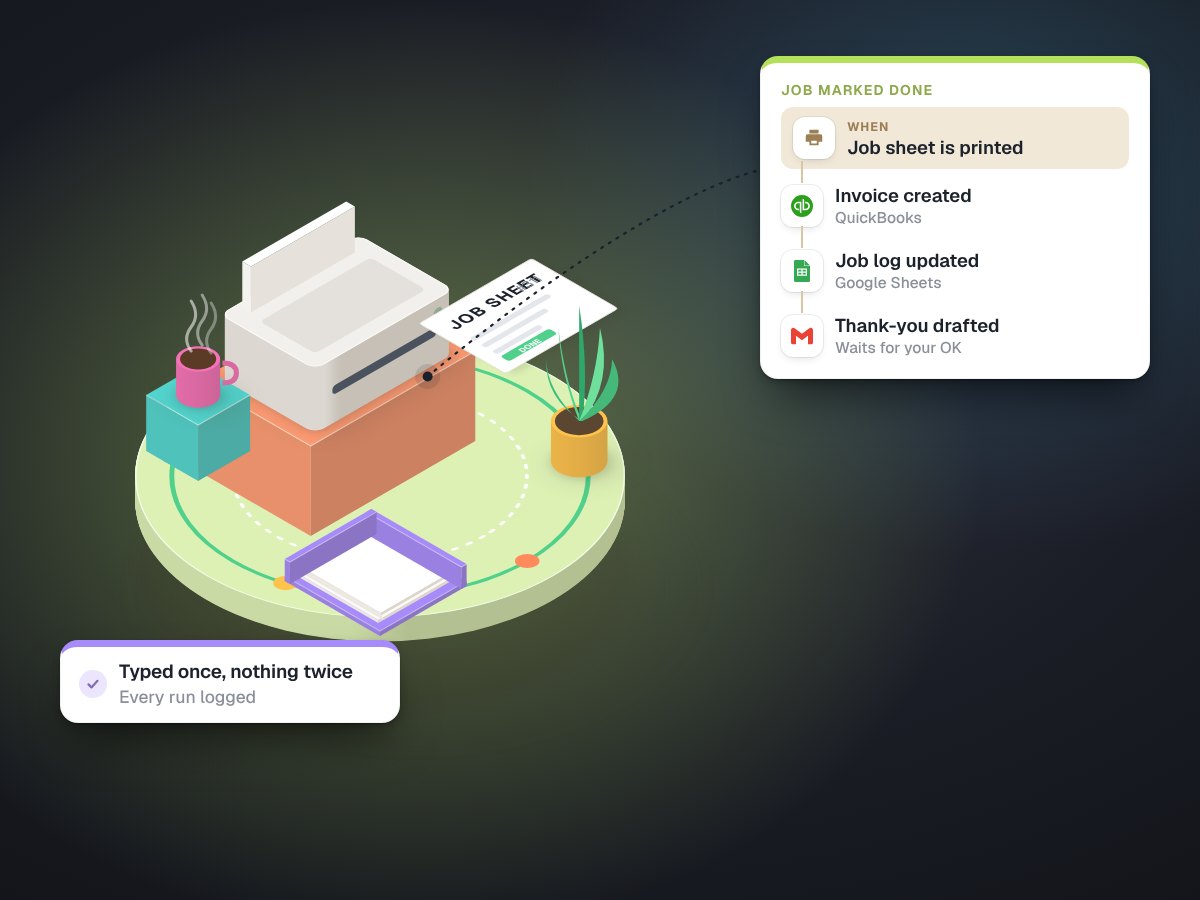
What usually comes next once the route is drawn.
Want to see your own route? Give us half an hour on site.
Start with a free call about where jobs get stuck. We will say whether a visit is worth it.