Agents that take the routine requests and hand the rest to you.
By answering calls and messages from facts you approve, collecting the details before a person steps in, and watching every agent with plain rules, we help small and mid-size businesses stop losing the work that arrives when nobody is free.
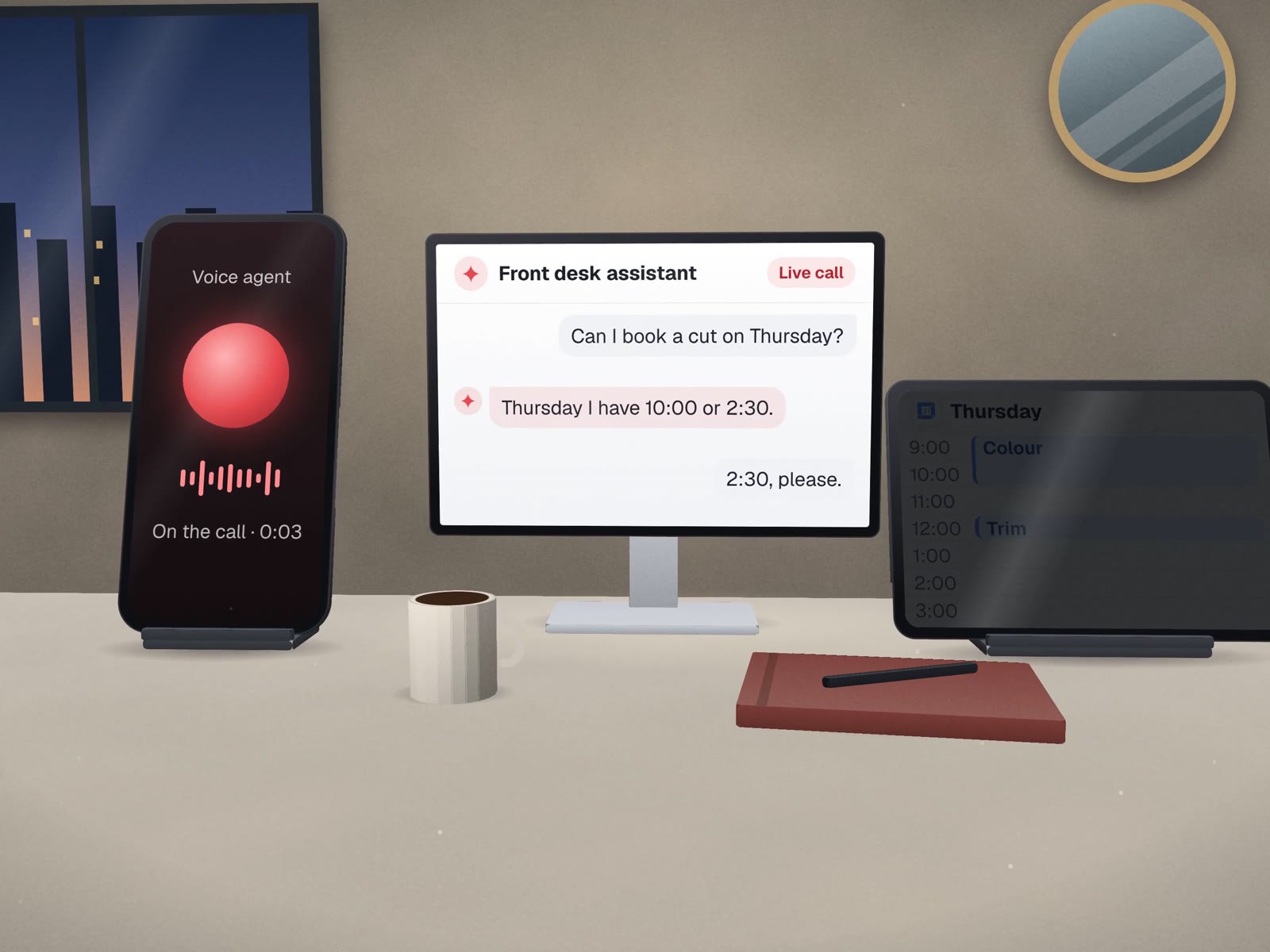
Nine kinds of agent, in three jobs.
Some talk to your customers. Some help your staff. The last two keep the others honest. Each page shows the build: what it connects to, where a person steps in and how it is tested.
Talk to your customers
Help your team
Run the agents and watch them
Many doors, one set of approved facts, one person in charge.
Every customer-facing agent reads from the same short list of facts you sign off. Change a price once and the phone, the chat and the staff assistant all say the new one.
Five rules every agent we build follows.
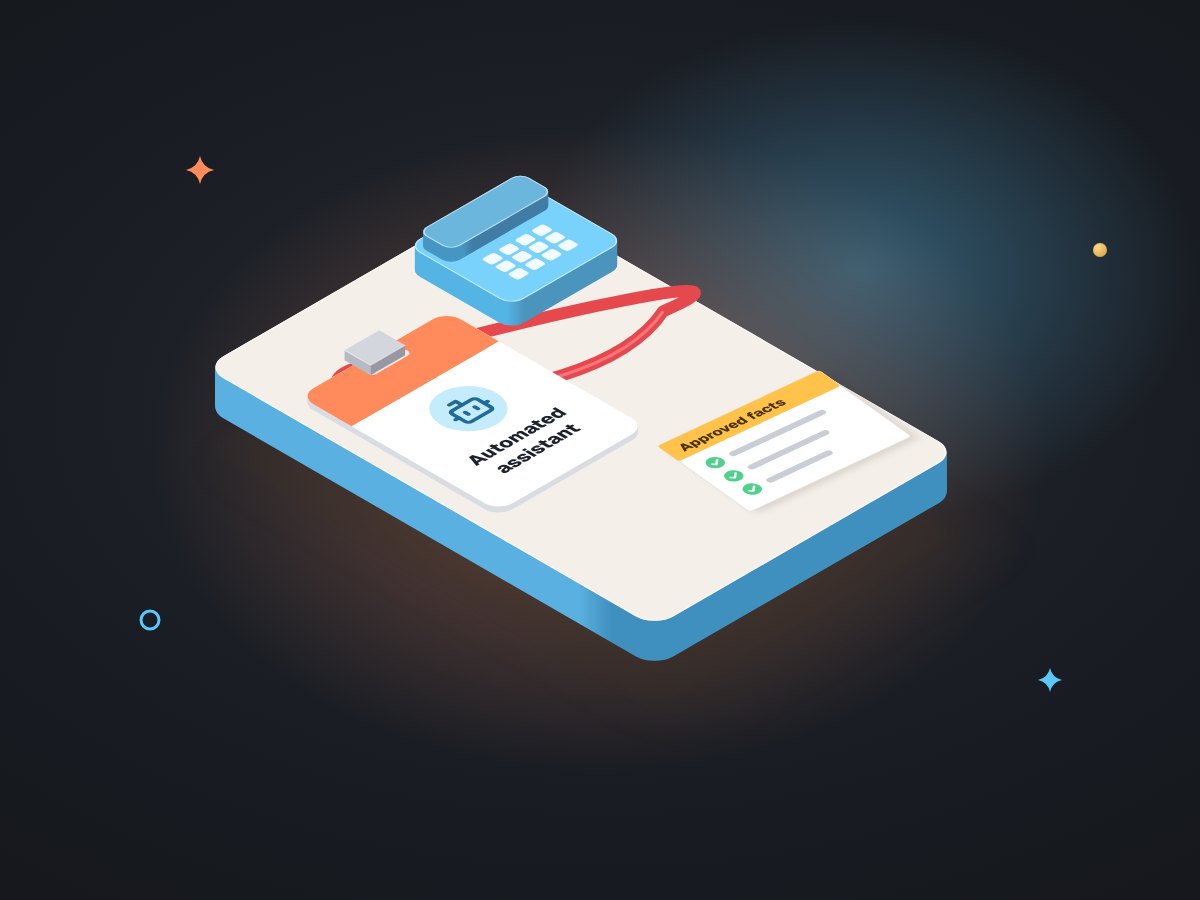
It says what it is
The first sentence of every call or chat says it is an automated assistant for your business. Anyone can ask for a person.
It answers only from what you approved
No browsing the internet for your prices. If the answer is not in the approved facts, it says so and takes a message.
Money, judgement and promises go to a person
Refunds, discounts, diagnoses, delivery dates you have not written down: all handed off, with the conversation attached.
Every decision leaves a reason
Which route it took and why is written down, so a wrong turn can be found and fixed instead of guessed at.
Autonomy is earned
Each job starts human-led, moves to human-assisted, and becomes autonomous only when someone decides it has earned it. Some jobs never do.
What we have built, and what we would build fresh.
We run our own company on agents, so the machinery behind them is real. Most customer-facing agents would be a first build for a client. Here is the honest split.
| Service | Where it stands | What it rests on |
|---|---|---|
| Multi-agent systems | Built in-house, in daily use | MUVES OS: 34 agents in 9 departments, routing by the cost of being wrong |
| Agent monitoring & debugging | Built in-house | A monitor with no model and plain rules; an evaluation suite run on real cases |
| Staff training bots | Parts built in-house | Agent skills that only reach a prompt after review |
| Assistants on your documents | How we'd build it | Our own notes searched before answering; the same test-set method |
| Phone answering agents | How we'd build it | A voice assistant with interruption handling, 31 + 21 automated checks |
| After-hours & overflow | How we'd build it | The same voice work, plus phone alerts that say something needs you |
| Reminder & follow-up calls | How we'd build it | The voice work; consent rules written before any code |
| Website chat & WhatsApp | How we'd build it | A live bilingual quote builder for a sign and print shop |
| Intake & qualification | How we'd build it | That quote builder's intake, and a service-area check that runs before anything is spent |
The agents we run our own company on.
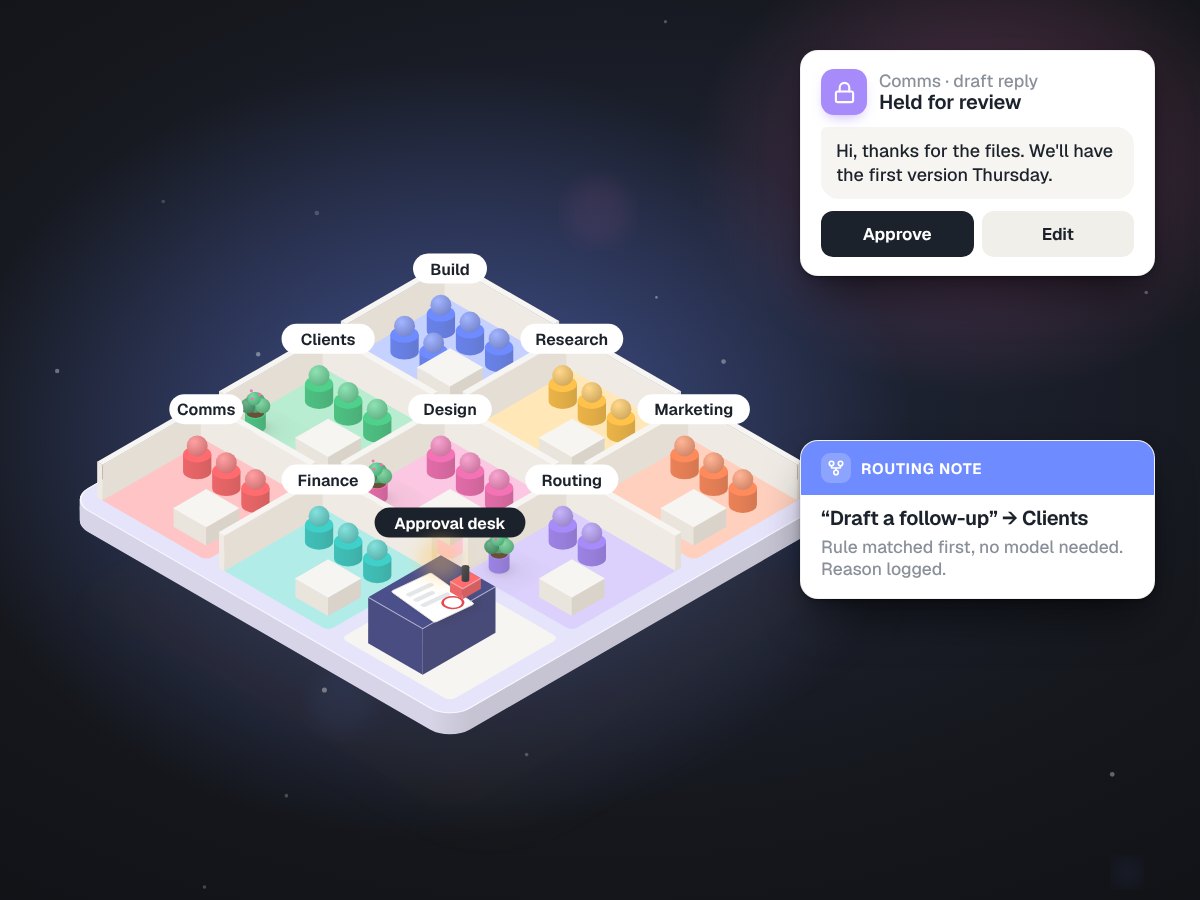
MUVES OS: 34 agents in nine departments, and none of them can send an email
One assistant you talk to, a crew behind it, a department head who reviews outward work, and a log of why every request went where it did.
Built in-house · Multi-agent system
See how it is built →A voice assistant you can interrupt
Tells a "mhm" from a real interruption and ignores its own echo. 31 interruption checks and 21 voice screen checks.
Built in-house · Voice
See the build →Agent monitoring that cannot be talked out of a problem
A separate watcher with no model. Opens an incident after two failing runs, closes it after five clean ones.
Built in-house · Monitoring
See the rules →Not every job needs an agent. For a dental lab we turned a printed invoice into a courier label with plain rules and no AI at all, because the job had one right answer. See LabelBot.
Writing on agents
What we learned building our own, and what to ask before you buy one.
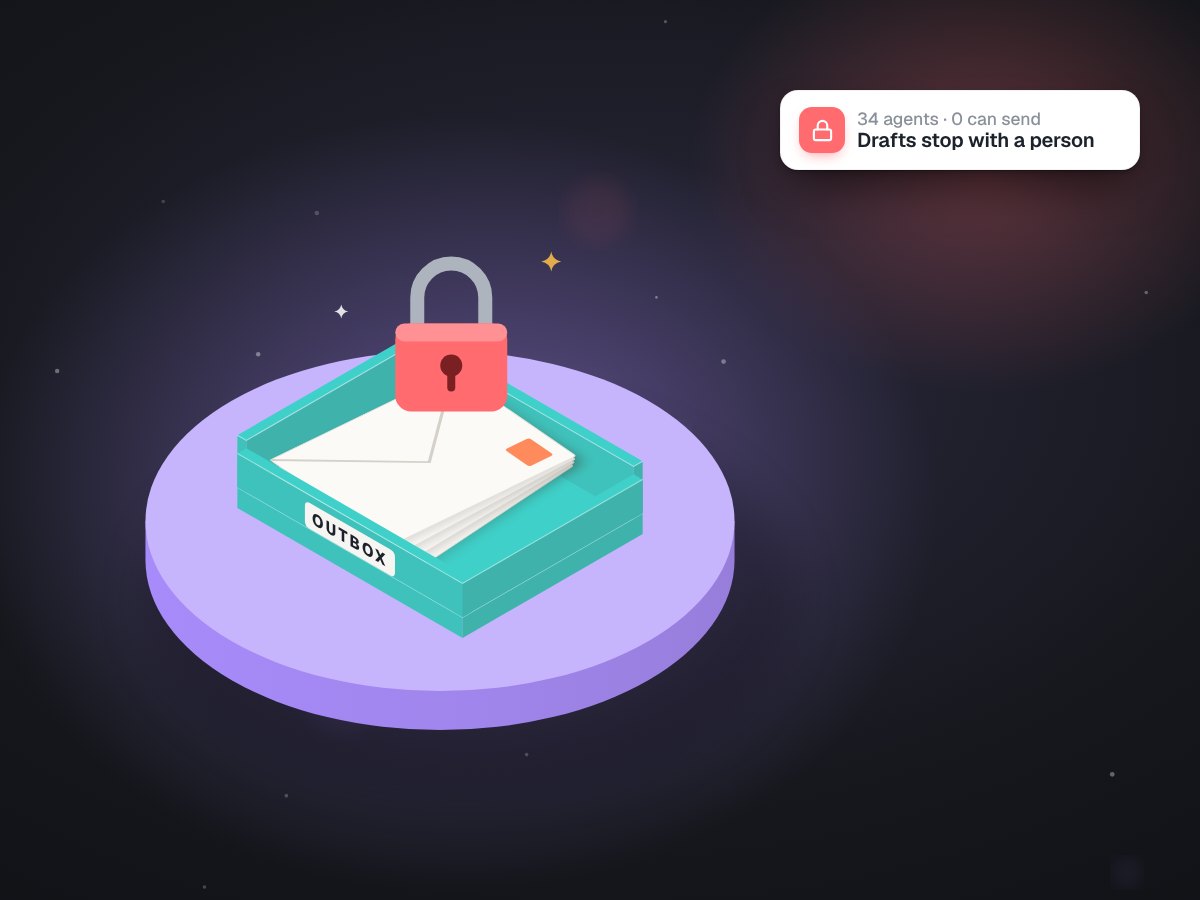
How two people run a company with 34 AI agents
And why none of them can send an email on its own.
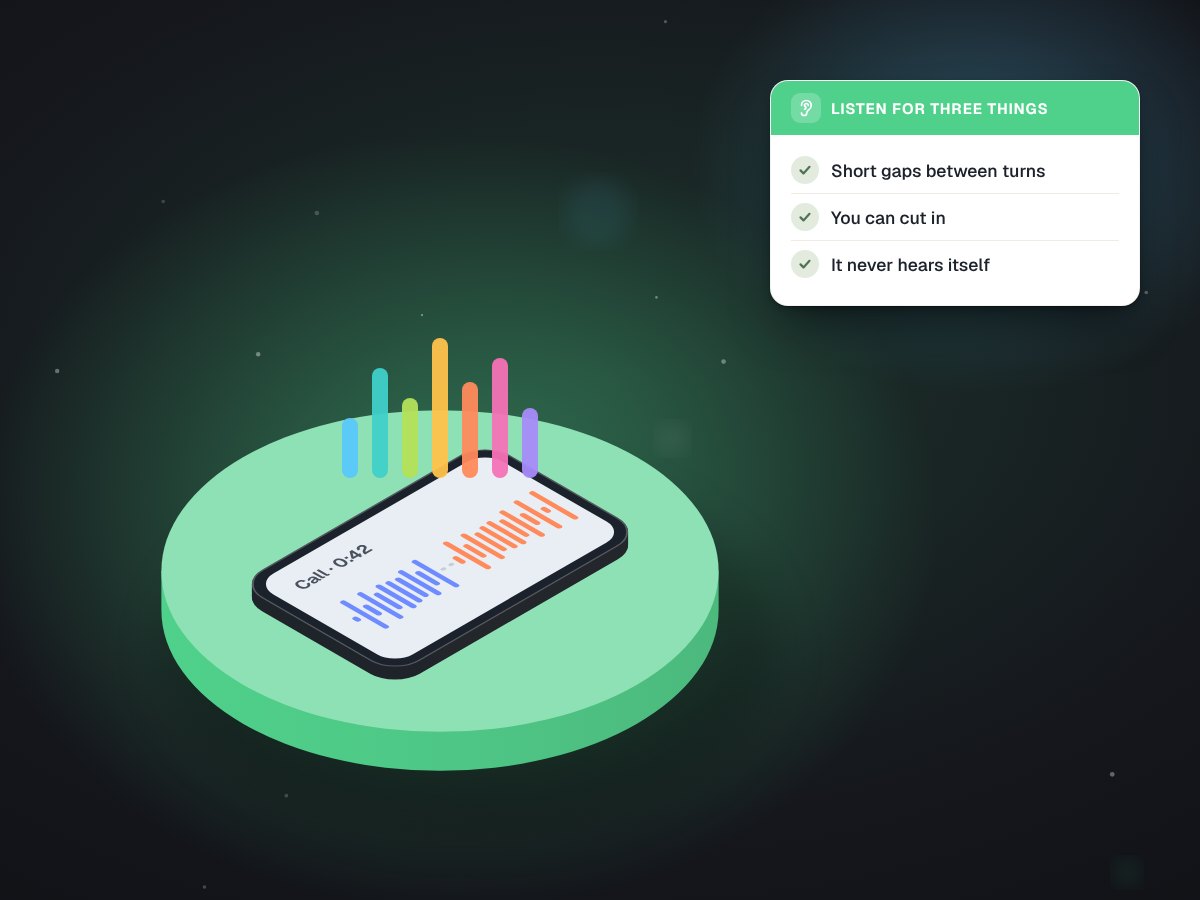
What makes an AI phone call feel natural
Silence, interruptions and echo, and why most voice bots get them wrong.
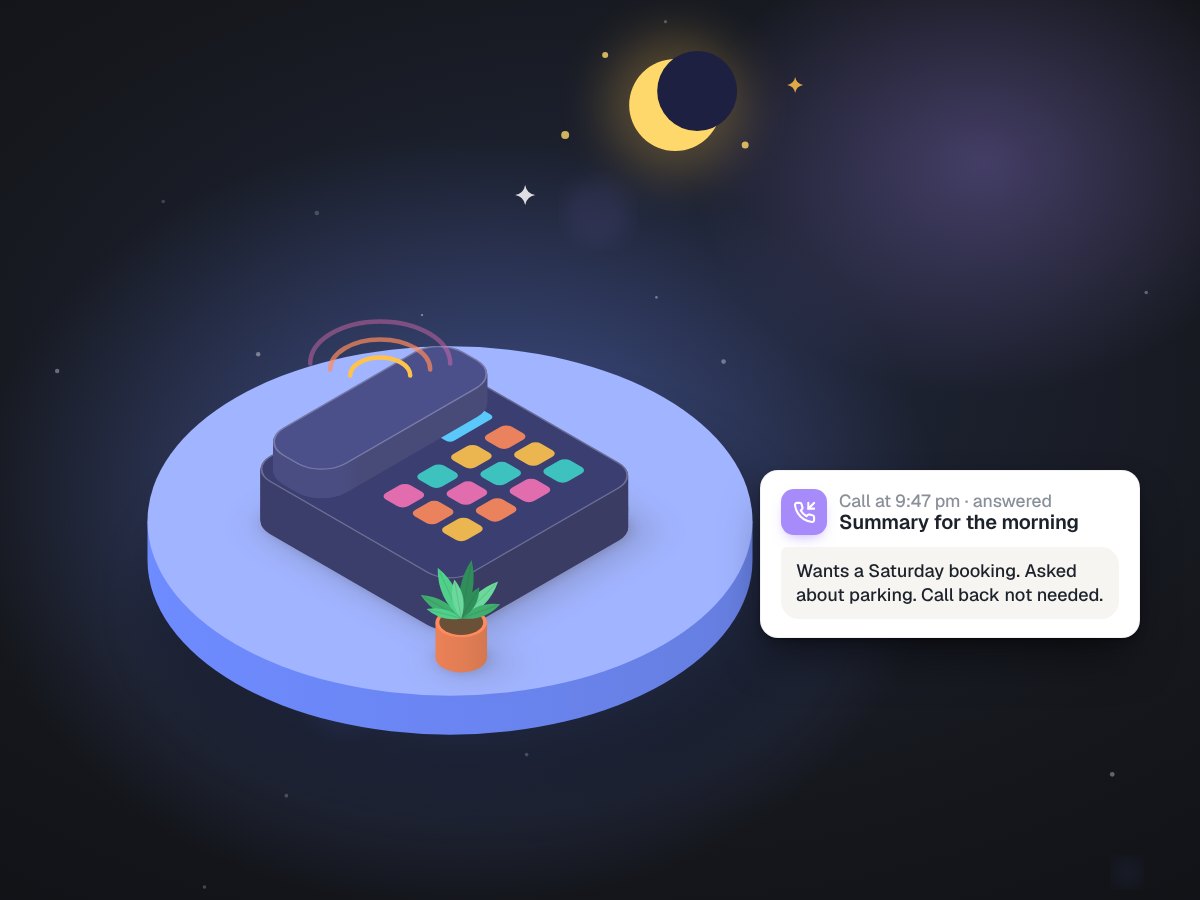
What an AI phone assistant can and can't do
Where it helps a small business, where it falls short, how to start small.
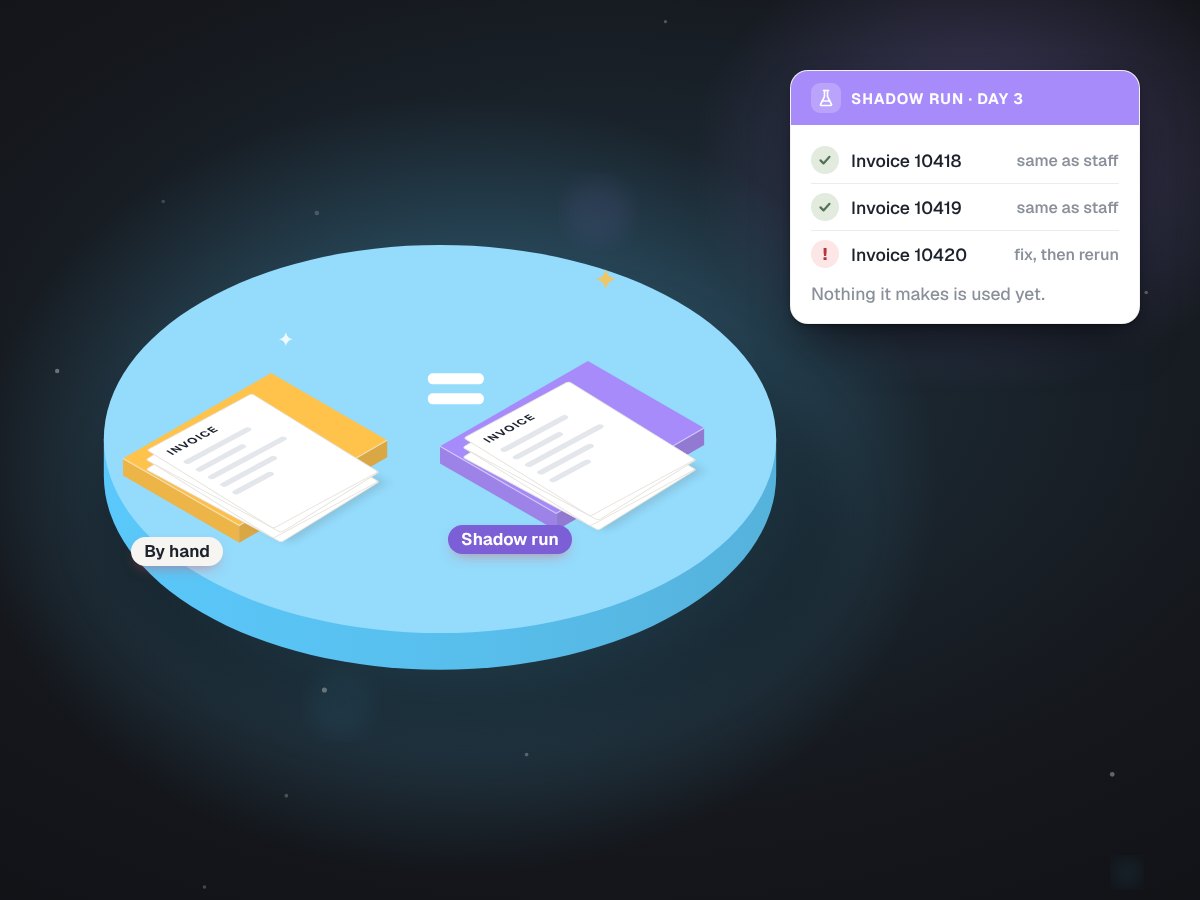
Test it on real paperwork first
How a shadow run works before anything automatic goes live.
Anywhere the phone rings while hands are busy.
What owners ask first.
Where should a business start with AI agents?
With the requests you already answer the same way every time and lose when nobody is free: after-hours calls, the same five questions in chat, the details you always ask before a quote. One channel, one job, a person reading every summary for the first weeks. More channels come once that one is boring.
Which of these have you actually built?
The parts that run behind agents are built and in daily use in our own company: a 34-agent system with routing and department review, a rule-based monitor, an evaluation suite, a voice assistant you can interrupt, and workflows that earn autonomy step by step. Customer-facing phone, chat and intake agents for a client are not built yet, so those pages show exactly how we would build one.
Do agents replace the people who answer the phone today?
No. They take the repeated, low-risk part: hours, directions, booking a slot, collecting details. Anything that costs money, judgement or a relationship goes to a named person, with the conversation attached so nobody asks the customer to repeat themselves.
Whose accounts do the agents run on?
Yours. The phone number, WhatsApp Business account, calendar and AI accounts are set up in your business's name, so you keep them if you ever stop working with us.
Tell us which requests slip through. We'll say if an agent is the fix.
On a free call we look at where calls and messages get lost, and whether an agent, a plain automation or nothing at all is the right answer.