Calls your customers asked for, made on time, every time.
An agent that calls your own customers about something they are expecting: tomorrow's appointment, an order ready for pickup, a quote they requested. It confirms, moves or passes the call to a person, and logs the result.
We do not do AI cold calling.
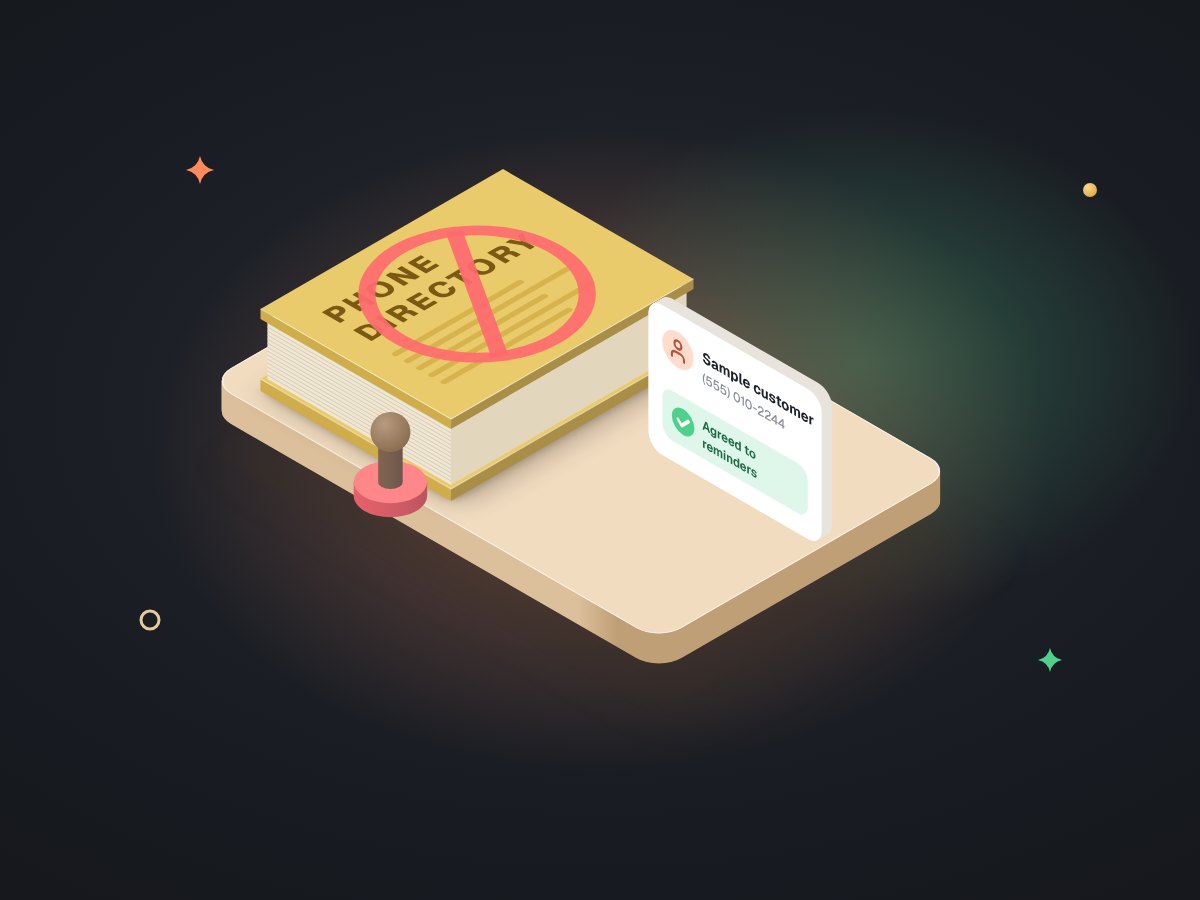
We only build calls to people who gave you their number and agreed to hear from you about this kind of thing. US federal rules require prior consent for calls made with an artificial or prerecorded voice, and in 2024 the FCC confirmed that AI-generated voices count. Many states, Florida among them, add rules of their own. So calling strangers with an AI voice is something we turn down, whatever the list or the offer. This is plain language, not legal advice: check your own situation with an attorney before any calls start.
Eight things that must be true before the first call.
We go through this with you before any code is written. Anything we can't tick, we fix first, or that call type is left out.
- The customer gave you the number.
On a form, a booking, an order or in person. Not found, bought or scraped.
- They agreed to automated calls about this.
The wording on the form covers reminders or order updates, not just "we may contact you".
- You can show when and where they agreed.
The date and the source are saved with the contact. If it's on paper, we add a way to record it.
- The call is about something they expect.
Their appointment, their order, their quote. No offers slipped in at the end.
- It calls only in hours you set, in their time zone.
And stops after a set number of tries.
- It says who it is.
An automated assistant for your business, in the first sentence.
- "Stop" works on the spot.
The number goes on your opt-out list during the call, with the date, and is checked before every future call.
- If calls are recorded, it says so.
Some states expect everyone on a recorded call to agree.
Four gates before the phone dials.
The call is triggered by your own system. Each gate is a plain rule, checked every time. A "no" at any gate means no call.
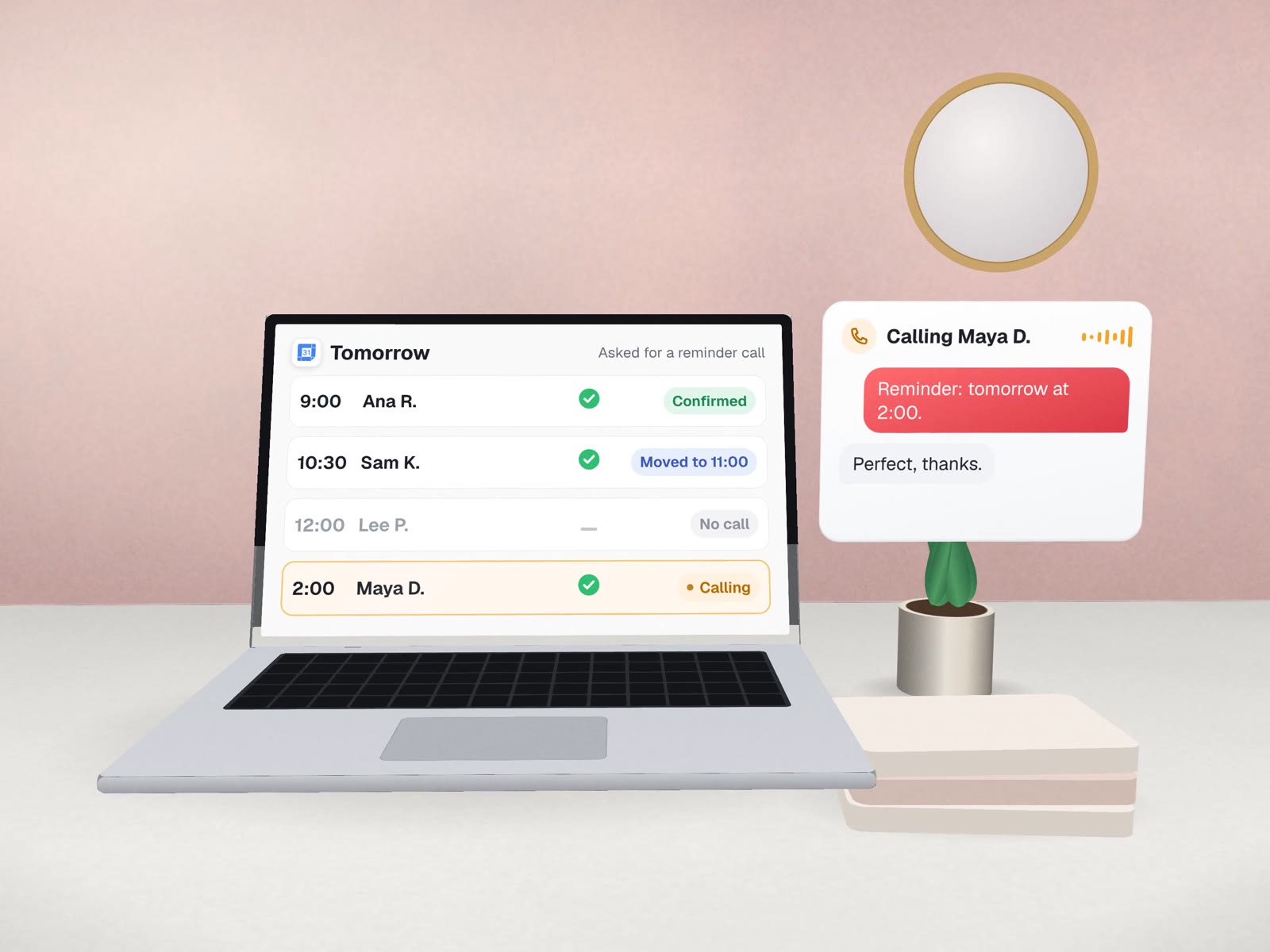
An appointment reminder, with every answer it expects.
For a made-up salon, Sample Studio. Your script uses your words and your branches.
"Hi, this is the automated assistant for Sample Studio, calling about an appointment tomorrow, Thursday at 3 pm. Can you still make it? You can say yes, no, or change it."
- "Yes"
- "Great, see you Thursday at 3." Marked confirmed in the calendar.
- "Change it"
- Offers two open times from the calendar, moves the booking, texts the new time.
- "No"
- "Thanks for letting us know. I've cancelled it." The slot opens and the front desk sees why.
- "Stop calling me"
- "Understood. You won't get these calls again." Number added to the stop list, with the date.
- Anything else
- "I'll pass that to the team, and someone will call you back." The question goes to a person.
- Voicemail
- Business name, "about your appointment tomorrow", a call-back number. No name, no service details.
No client calls yet. The rule came before the code.
We have not run calls for a client. The voice side would reuse our own assistant's real-time voice, which stops when someone cuts in and ignores its own echo, with 31 interruption checks and 21 voice screen checks. In our own product plans, AI cold calling is parked and stays parked.
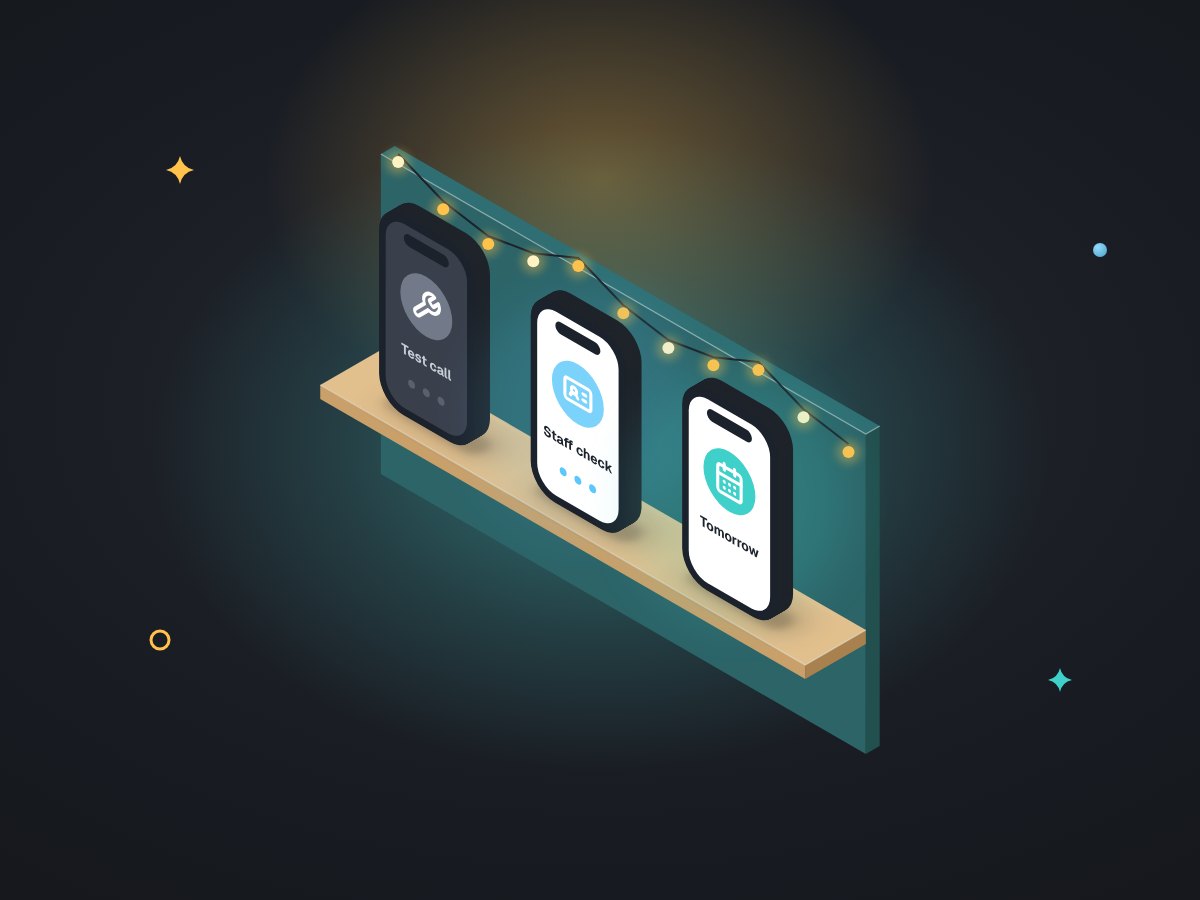
Before a real customer gets a call, you get them all. We run each branch of the script against your own phone, then a short period where the agent places calls only to your staff, then a small first batch of real reminders with every result read by a person.
What you will need
- Where customers agree todayThe form, booking page or counter where consent is given now.
- The triggerThe event in your system that should start a call.
- The messagesIn your words, for each call type.
- Who handles call-backsThe person or inbox that picks up what the agent passes on.
Before anyone gets a call.
Can we use it on a list we bought or rented?
No. A bought list does not carry the customer's agreement to automated calls from you, so we will not build calls to it.
What does it say on voicemail?
Your business name, that it is about an upcoming appointment or order, and a number to call back. No customer name and no details, because voicemail is often heard by someone else in the house.
Why not just send a text?
Often a text is the better choice, and we will say so. Calls earn their place when the customer needs to answer something, like confirming or moving a time, and some customers simply pick up more readily than they read texts.
Related to reminder calls
Reminders without a voice, the inbound side, and the voice work behind it.
Booking & reminders
Texts and emails that cut no-shows, no voice needed.
Phone answering agents
When the customer calls you back.
Win-back & reactivation
Inviting past customers back, by the rules.
A voice assistant you can interrupt
The voice work these calls would reuse.
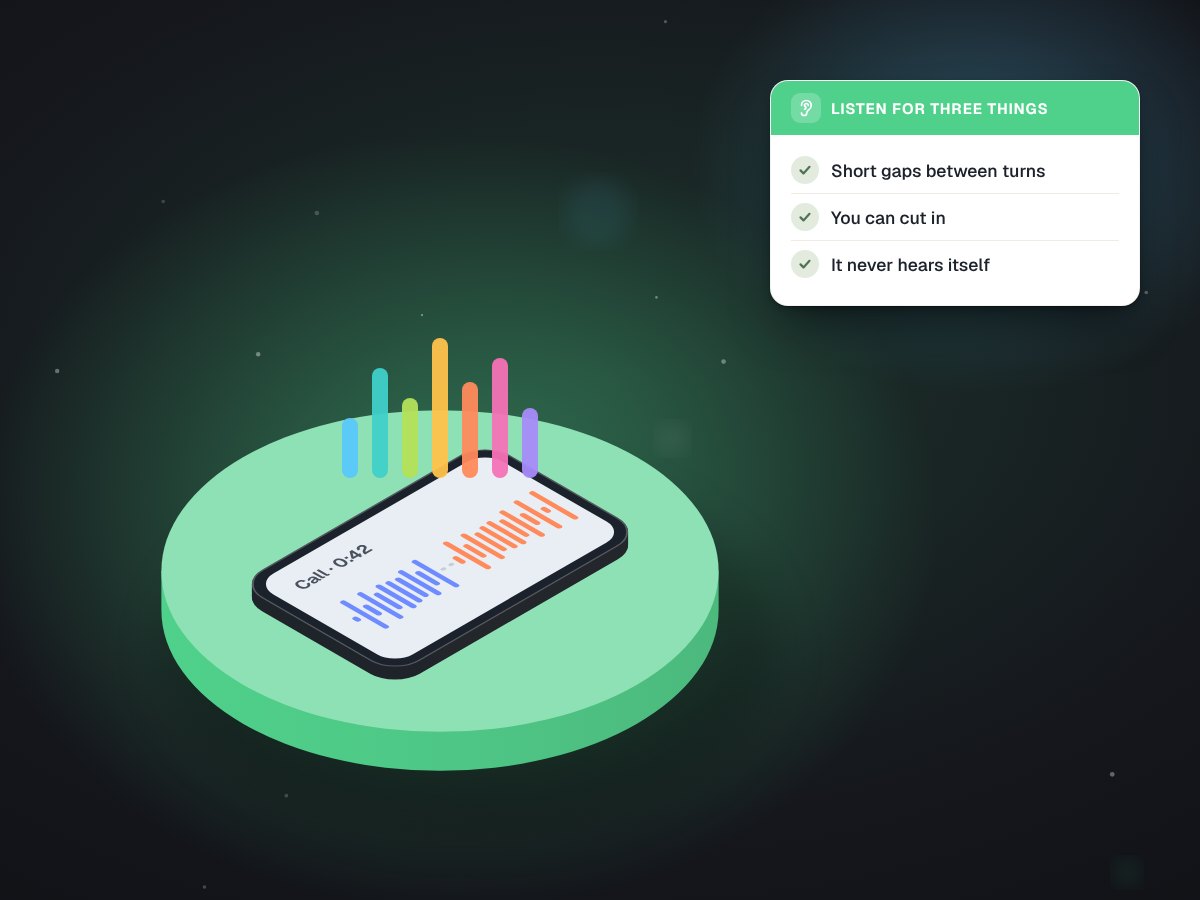
What makes an AI phone call feel natural
Why short pauses matter more than voices.
Which calls do you mean to make and never get to?
On a free call we list them, check what your customers agreed to, and tell you which ones should be a call, a text or nothing.