The numbers arrive before your coffee does.
One short note, every morning: what is on today, what is due, how yesterday went, and the two or three things that need a person. Assembled from your own systems. Honest when a source did not answer.
Different questions, different clocks.
A sample rhythm. Each report goes to the person who acts on it, not to everyone.
Calendar, accounting, CRM and job sheet are read. Anything that fails is noted.
Owner and managers get today, money and exceptions on one screen of email.
Last week against the four before it, with the three biggest changes explained.
Totals, unpaid invoices and top customers, ready for your bookkeeper.
A brief that invents nothing.

Missing is not zero
If a source does not answer, the brief says which one and what is missing. A blank never quietly becomes "0 bookings".
Every line has a home
Each item links to the invoice, booking or record it came from, so you can check it in one click.
Exceptions first
Things that need a person sit at the top. Good news can wait for the second paragraph.
Short enough to read on a phone
If it needs scrolling, something should move to the weekly review or the dashboard.
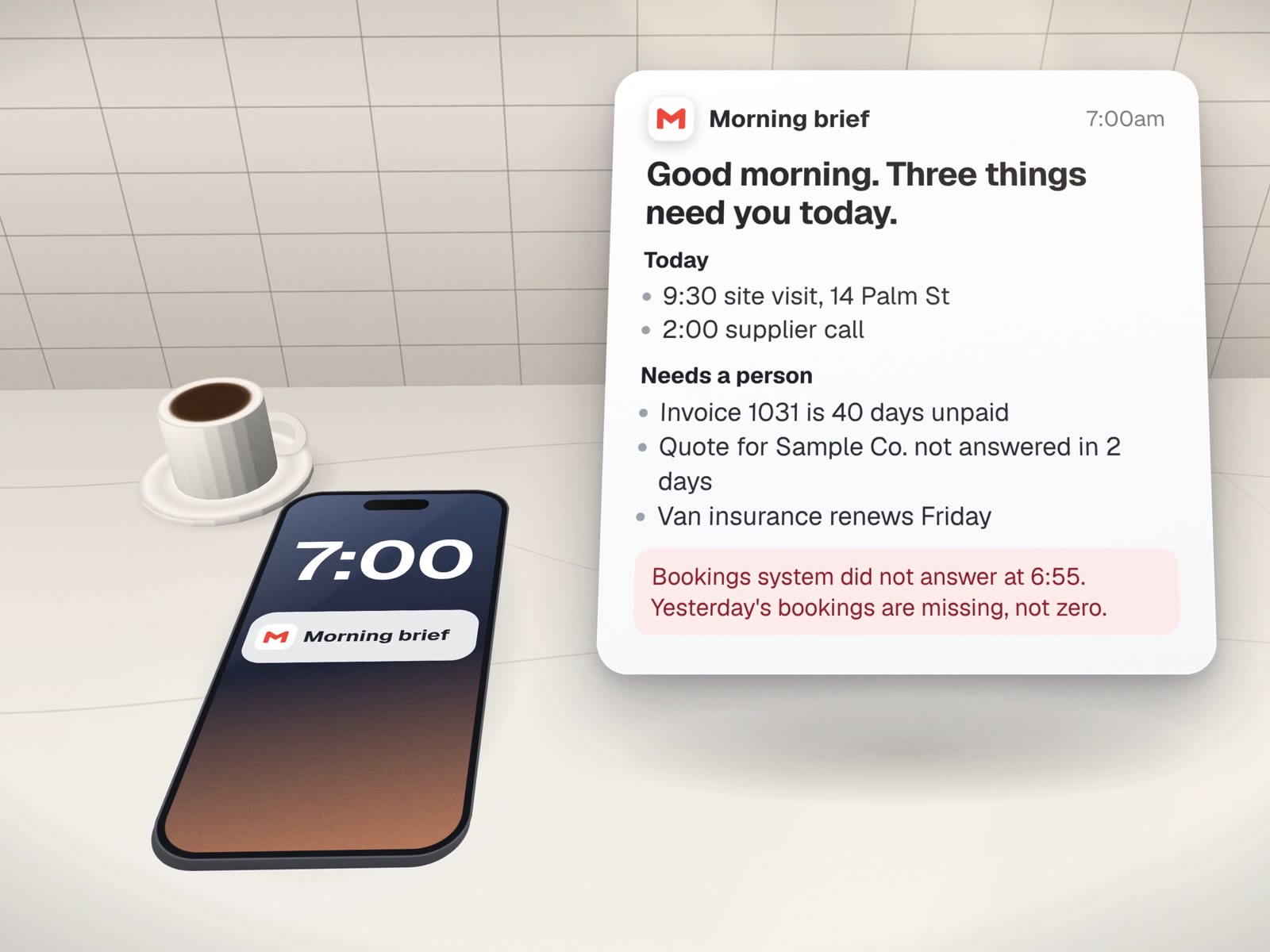
Good morning. Three things need you today.
Today
- 9:30 site visit, 14 Palm St
- 2:00 supplier call
Money
- Yesterday: $2,940 in, 6 invoices sent
- Due this week: 4 bills, $1,880
Needs a person
- Invoice 1031 is 40 days unpaid
- Quote for Sample Co. not answered in 2 days
- Van insurance renews Friday
Bookings system did not respond at 6:55. Yesterday's bookings are missing from this brief, not zero.
We read one every morning.
The home screen of our own operating system opens on a morning brief built from our calendar, deadlines and any open incidents. Its news section uses real feeds with links to the source, and nothing is written in to fill a gap.
Our finance workbook writes a payments calendar every day at 6am, so money due sits next to meetings without anyone typing it.
Neither is a client build. For your business we would point the same pattern at your accounting, CRM and calendar, and send it by email, text or a chat app your team already uses.
Pick by how you work, not by what looks impressive.
| A brief or report | A dashboard | |
|---|---|---|
| You get it | Pushed to you on a schedule | When you go and look |
| Best for | Exceptions and "what changed" | Exploring, comparing, drilling in |
| Works on | Any phone, any inbox | A screen and a login |
| Fails when | It gets too long to read | Nobody opens it |
About scheduled reports.

Can the brief come by text or WhatsApp instead of email?
Yes, as a short version with a link to the full one. WhatsApp only through the official WhatsApp Business Platform, never through unofficial bridges.
Does AI write the summary?
The numbers come straight from your systems. A language model can turn them into a few readable sentences, but it is only allowed to use figures that are in the data, and the figures are shown beside the sentence.
Can different people get different reports?
Yes, and they should. The owner sees money and exceptions, the office manager sees today's schedule, the bookkeeper gets the month-end pack.
More on getting the numbers to you
The screen version, and what feeds it.
Owner dashboards
For when you want to look, not be told.
A multi-agent operating system
Home of the brief we read every morning.
Inbox triage & filing
So "needs you" emails reach the brief.
Invoicing & payment reminders
Where the money lines come from.
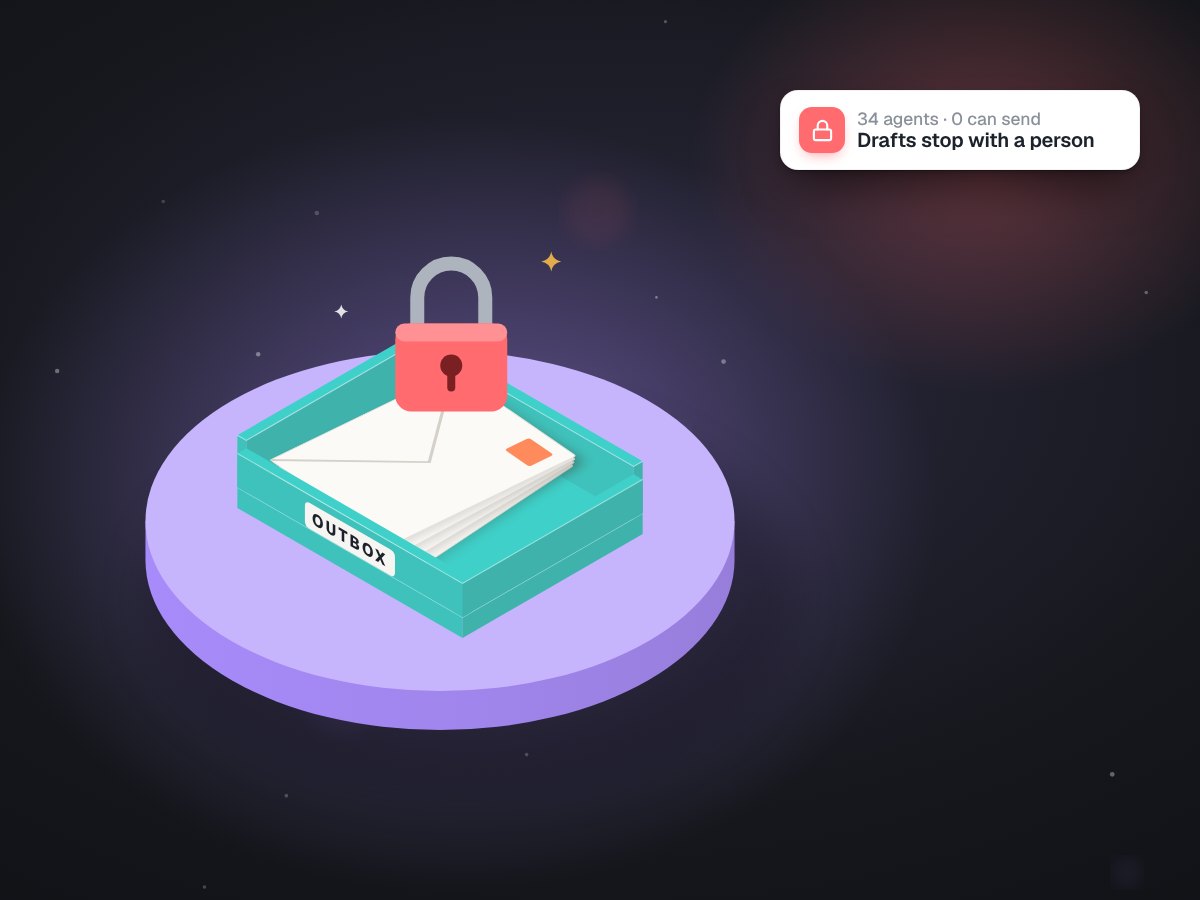
Two people, 34 AI agents, and none can send an email
Our own daily rhythm.
What would you want at 7am tomorrow?
List it on a free call. We will tell you which lines we can fill from your systems, and which we cannot yet.