Notice who is slipping away while there is still time to call.
Customers rarely announce they are leaving. They order a little less, then a little later, then stop. We measure each customer against their own past rhythm, sort them into a few honest groups, and give your team a short list of the ones worth a personal call.
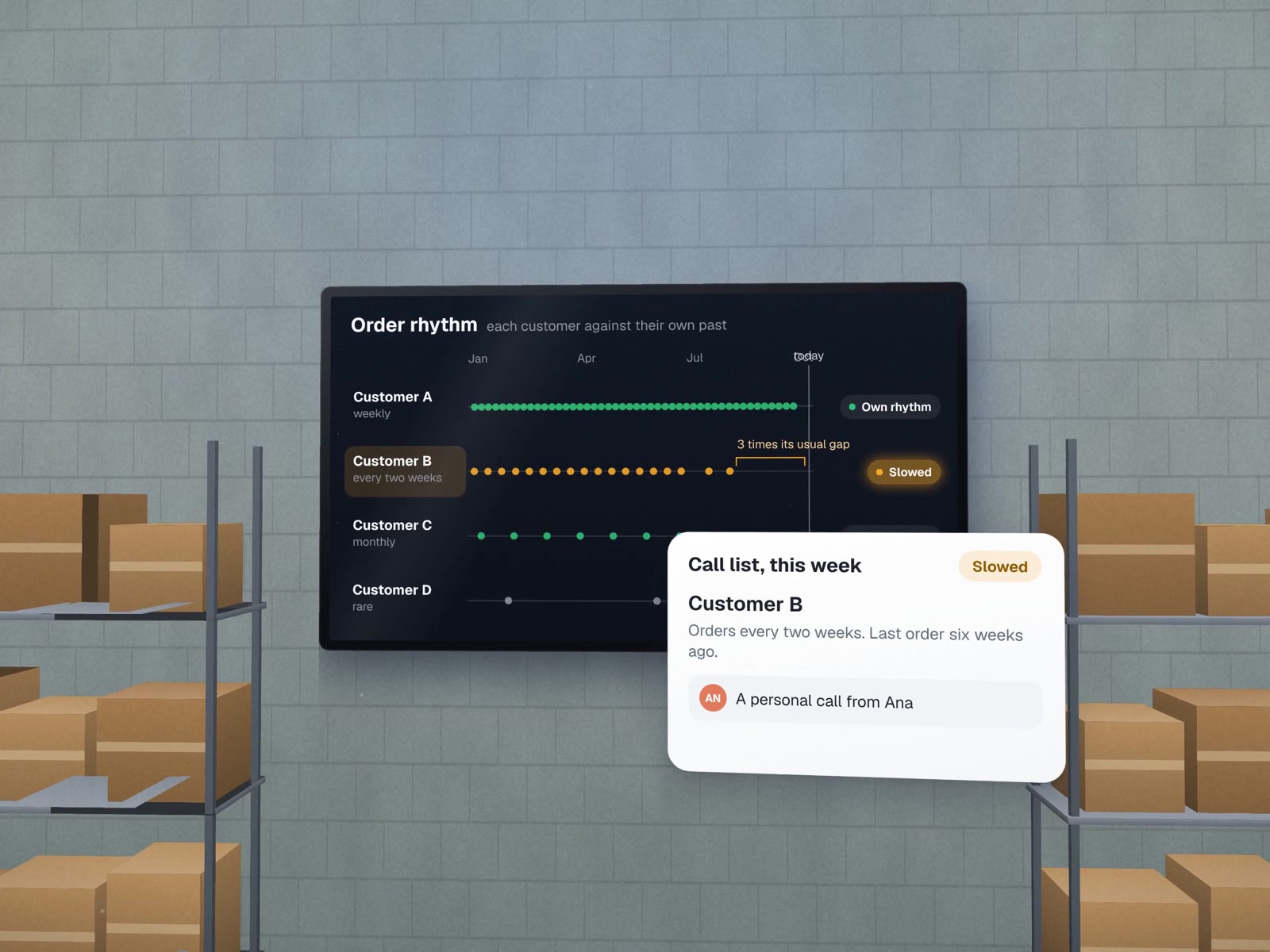
Each customer, measured against themselves.
Four sample customers, one dot per order over a year. The same gap means something different for each of them.
Different groups, different moves.
| Group | What it means | Suggested move |
|---|---|---|
| Own rhythm | Buying as often as they always have | Leave them alone. Thank them now and then. |
| Slowed | Gaps getting longer than their own normal | A personal call from someone they know. This group is where win-back pays. |
| Lapsed | Silent for several of their usual gaps | A short, honest note asking what changed. Then a call if they reply. |
| Too little history | New, or rare buyers | No conclusion yet. Treat as new customers. |
| Shared contact | Several accounts behind one phone or email | Kept out of anything automatic until you decide who to speak to. |
25,336 cases, read to learn each practice's rhythm.
Carlos Ceramics Dental Lab serves dental practices that send cases at very different paces. We analysed the lab's own system backup to find who was steady and who was drifting.
Aggregates only
The analysis read counts and dates from the lab's backup. The patient table was never extracted.
325 practices profiled against their own baseline
Each one needed four or more weeks of history; anyone with less went to "too little history". A single fixed threshold, tried first, flagged no one at all.
The records were wrong in both directions
The system's own status field marked some active practices inactive and the reverse. We also found duplicate practice records, one group of locations behind a single contact, and practices sharing a phone or email, which made per-practice messaging unsafe.
A call kit, not a blast
From the live account list we built a new-accounts call list, a win-back list, call and email scripts with the offer left blank for the owner to fill, and a plain-English cheat sheet of the lab's 205 catalogued products so whoever calls can answer questions.
A short list worth calling, kept current.

- Every customer in a groupWith the rule written down so you can check it.
- Groups written onto your CRM recordsSo they update as orders arrive.
- A short call list for the "slowed" groupWith notes on each account.
- A script and an email draftThe offer is left to you.
- A monthly re-runOr a view in your CRM that keeps itself current.
Any business with customers who come back on a cycle.
Suppliers and wholesalers
Accounts that reorder on a cycle.
Labs and clinics
Referring practices or recall patients.
Salons and studios
Regulars who skip a month.
Service shops
Yearly maintenance customers.
What it won't do.
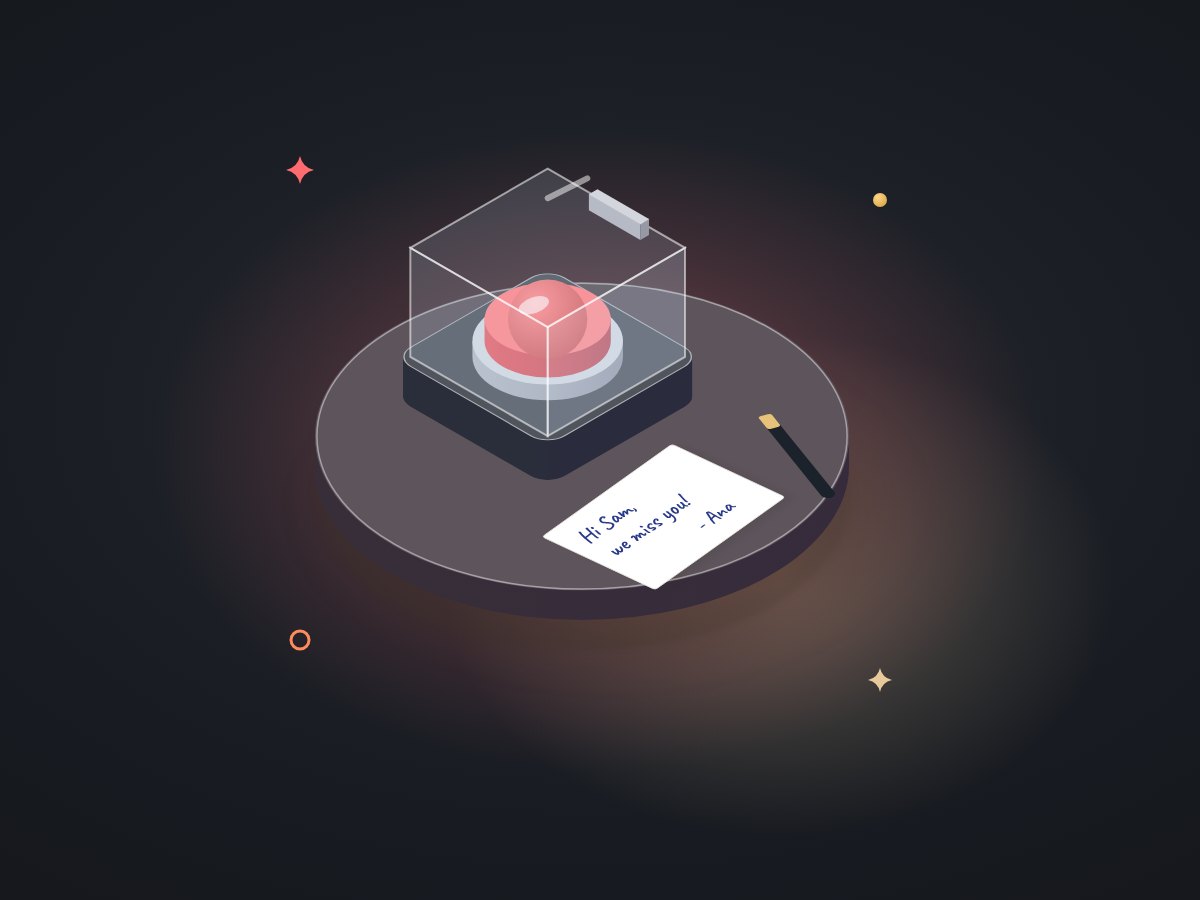
- No automatic messages from this list.You choose who hears from you, and how.
- No contact with people who never agreed to hear from you.Permission comes first.
- No price on a customer.The groups are about rhythm, not worth.
About winning customers back.
Why not just flag anyone who hasn't bought in 90 days?
Because customers buy on very different rhythms. A weekly regular who goes quiet for a month is a warning; a twice-a-year customer quiet for 90 days is normal. A single cut-off flags the wrong people, or nobody at all.
How much history do you need?
Enough for each customer to show a pattern. We use at least four weeks of activity per customer and put anyone with less into a separate group, rather than guessing about them.
Do you call our customers?
No. We prepare the call list, the notes and a script; you or your team make the calls. People who know the customer get far better conversations than a stranger would.
More on keeping customers
The analysis, the records and the follow-up.
Someone used to order every week. Do you know who stopped?
Bring an export of your orders to a free call. We'll show you what it can tell you.