Guides & checklists · Guide · Part 3 of 4
What an AI receptionist should handle, and what it should hand to you
Where an AI phone assistant earns its keep, where it does not, and how to roll one out without spending your customers’ trust.
In brief
- Good jobs for an assistant: hours, directions, bookings, after-hours calls and call summaries.
- Anything that needs judgement, empathy or expertise goes to a person, and callers can always reach one.
- Start with after-hours calls, read every summary for the first weeks, and widen its job only when it earns it.
Picture a salon on a Saturday. Every stylist has a client in the chair and the phone keeps ringing. Some callers leave a message. Others call the next salon on the list. The same thing happens at an auto shop when the front desk is out back, or at a restaurant in the dinner rush.
An AI phone assistant answers your line, talks in a natural voice and handles simple requests. It is not a replacement for your staff. Set up well, it catches calls you miss today. Set up badly, it annoys the customers you most want to keep.
Where it earns its keep
- Repeated questions. Hours, location, parking, walk-ins, which makes you work on. Write the answers down once and it gives them the same way every time.
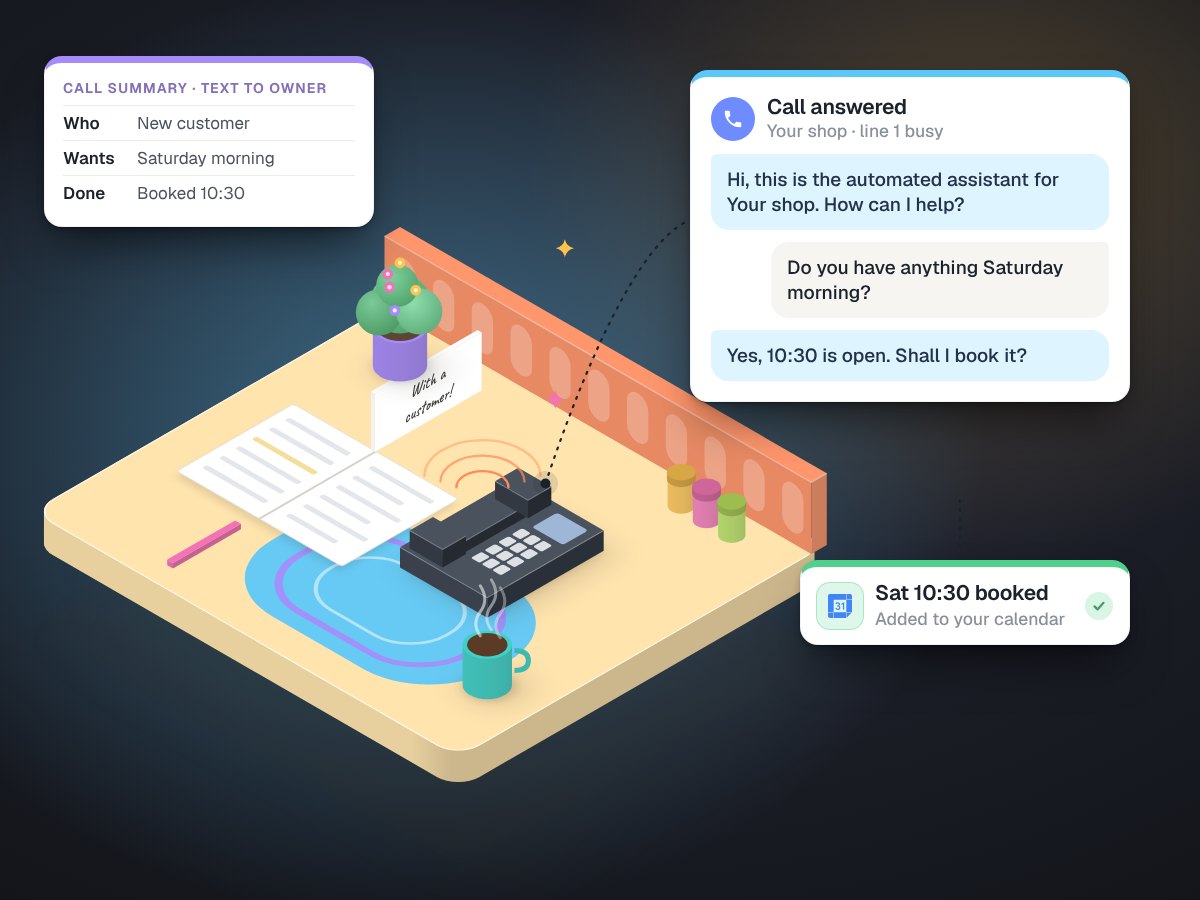
- Booking, moving and cancelling. Connected to your real calendar, it can offer open times and book them, at ten at night if need be.
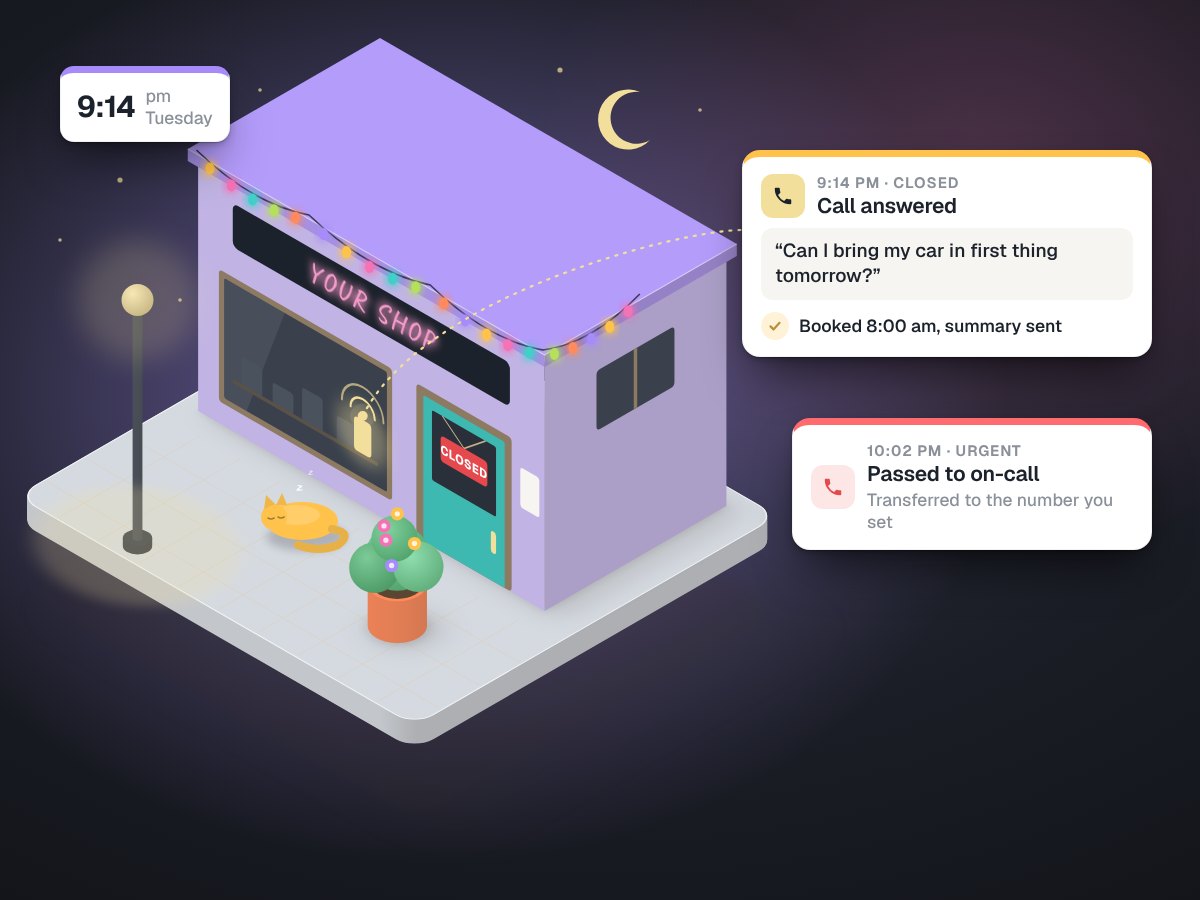
- After-hours and overflow. When you are closed or every line is busy, it can at least take the details so someone calls back.
- Summaries. A short note after each call, who called, what they wanted and what was done, is quicker to read than a voicemail is to play.
- Two languages. Many assistants can answer in English and Spanish.
Where it should step aside
It does not know what you have not told it, and guessing is the real risk. Ask any vendor what happens when the assistant cannot answer, and make sure the answer is "it takes a message", never "it improvises".
It should not give professional advice. A dental office should not let it decide whether a toothache is an emergency, and an auto shop should not let it diagnose a noise. Upset customers, billing complaints and complicated orders need a person who can listen and make a call. It can also mishear names and numbers on a bad line, so it should read them back.
Questions with one right answer go to the assistant. Anything that needs judgement goes to a person.
What to write down before you switch it on
Most of the work is not technical. It is writing down what your best front-desk person already knows:
- Your twenty most common questions, each answered in one or two plain sentences.
- Your booking rules: service lengths, buffers, who does what, how far ahead, the cancellation policy.
- Your hand-off rules: which calls go straight to a person, who takes them by day and after hours, and what counts as urgent.
- What it must never say: no prices for custom work, no promised repair times, no medical advice.
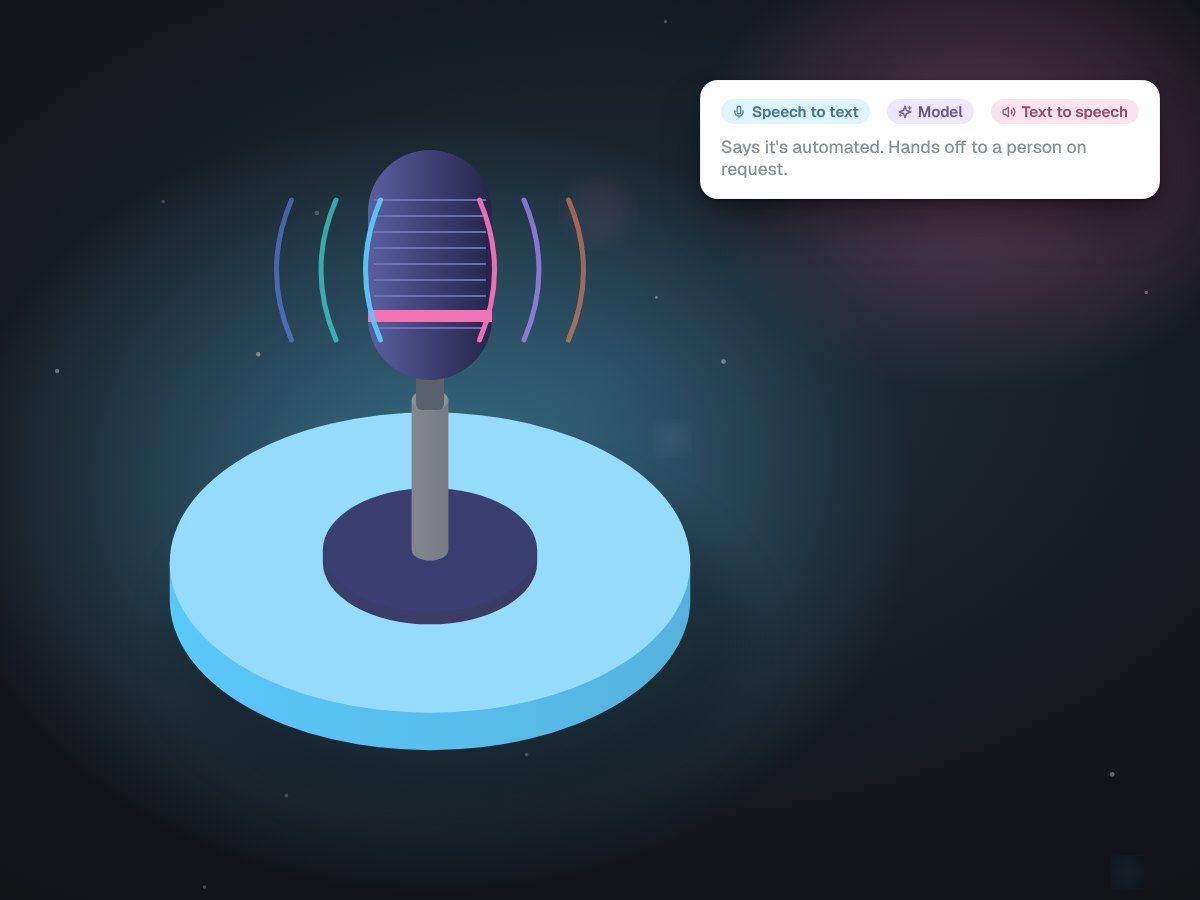
- How it introduces itself. It should say it is an automated assistant. Callers deserve to know.
Privacy and consent
Calls carry personal details. Before anything goes live, find out where recordings and transcripts are kept and for how long, who can see them, whether you can delete them, and whether the vendor trains on your calls. Keep health details and card numbers out of it unless the setup is built and contracted for that; for payments, send a secure link instead.
Florida is one of the states that require everyone on a call to agree to recording, so a recorded line should say so at the start. Outbound calls are a different matter again: AI-voiced calls need the person's consent, which is why we only build calls to people who asked to hear from you, and do not do AI cold calling. This is plain language, not legal advice; check with your attorney if you work in a regulated field or call across state lines.
Start small
You do not need to hand over the whole phone line on day one. Start with after-hours calls only, since those go to voicemail anyway. Limit it to answering the top questions, taking messages and booking simple appointments. Read every summary for the first few weeks and fix the script each week. Call it yourself: ask hard questions, mumble, ask in Spanish, ask for a person. Add busy-hour overflow and more tasks only once you trust the results, and keep a person one tap away for every caller.
That is the rollout we follow for after-hours and overflow answering. If you want to understand the parts first, start with what a voice agent is.