Explainers · Explainer · Part 1 of 6
What is an AI agent?
A chatbot answers. An agent does something: it reads, decides on a next step, uses a tool and checks the result. A plain answer for owners, with the limits that matter.
In brief
- An AI agent is a language model given a job, a set of tools it may use, and the ability to take several steps toward a goal.
- The useful ones are narrow: one job, a short list of tools, and a person who approves anything that matters.
- Before you trust one, ask what it can touch, what it can send, and how you will know when it goes wrong.
"Agent" has become the word for almost anything with AI in it, which makes it hard to know what you are being sold. Here is a working definition we use: an AI agent is a language model that has been given a job, a set of tools it is allowed to use, and the ability to take more than one step on its own to get the job done.
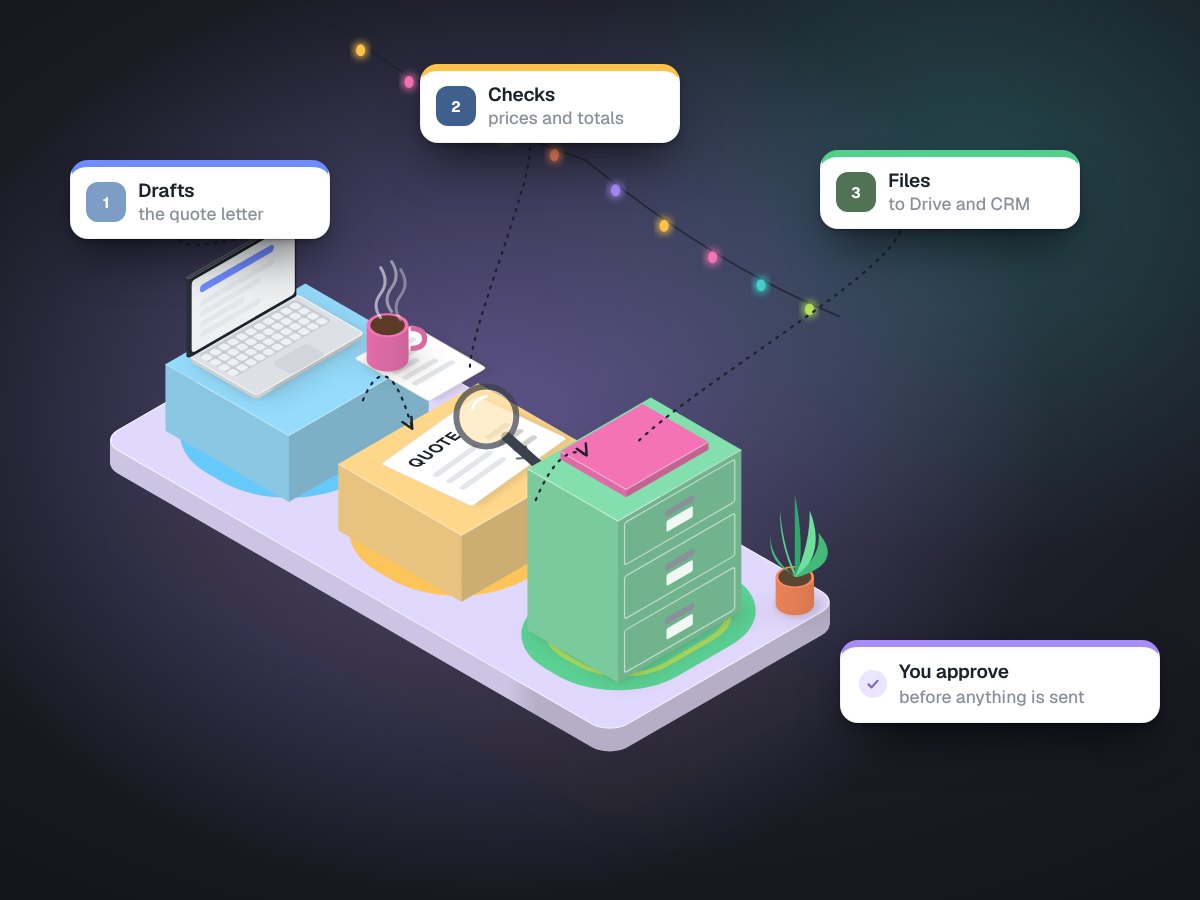
A chatbot answers your question and stops. An agent can read your question, decide it needs to look something up, look it up, draft a reply, check the draft against a rule, and hand it to you. The steps are what make it an agent.
The four parts
- A model. The language model that reads and writes. It can be a large one in the cloud or a small one running on a computer in your office.
- Instructions. A written job description: what it is for, what good looks like, what it must never do.
- Tools. The things it is allowed to touch: search your documents, read a calendar, create a draft email, look up an order. Every tool is a door, so the list should be short.
- A loop. The ability to take a step, look at the result, and decide the next step, until the job is done or it needs to stop and ask.
Agent, automation or chatbot?
Exhibit 1Three things often called "AI"
| Chatbot | Workflow automation | AI agent | |
|---|---|---|---|
| Does | Answers in a chat window | Runs fixed steps when something happens | Decides its own next step toward a goal |
| Good for | Questions with known answers | The same task, the same way, every time | Tasks with some variety: triage, research, drafting |
| Main risk | Making up an answer | Running twice, or on bad input | Taking a wrong step with a real tool |
Plenty of jobs do not need an agent at all. If the steps never change, a plain automation is cheaper, faster and easier to trust. Agents earn their place where the input varies: emails that need sorting, requests that need a bit of research, documents that need reading before anyone can act.
What they are good at today
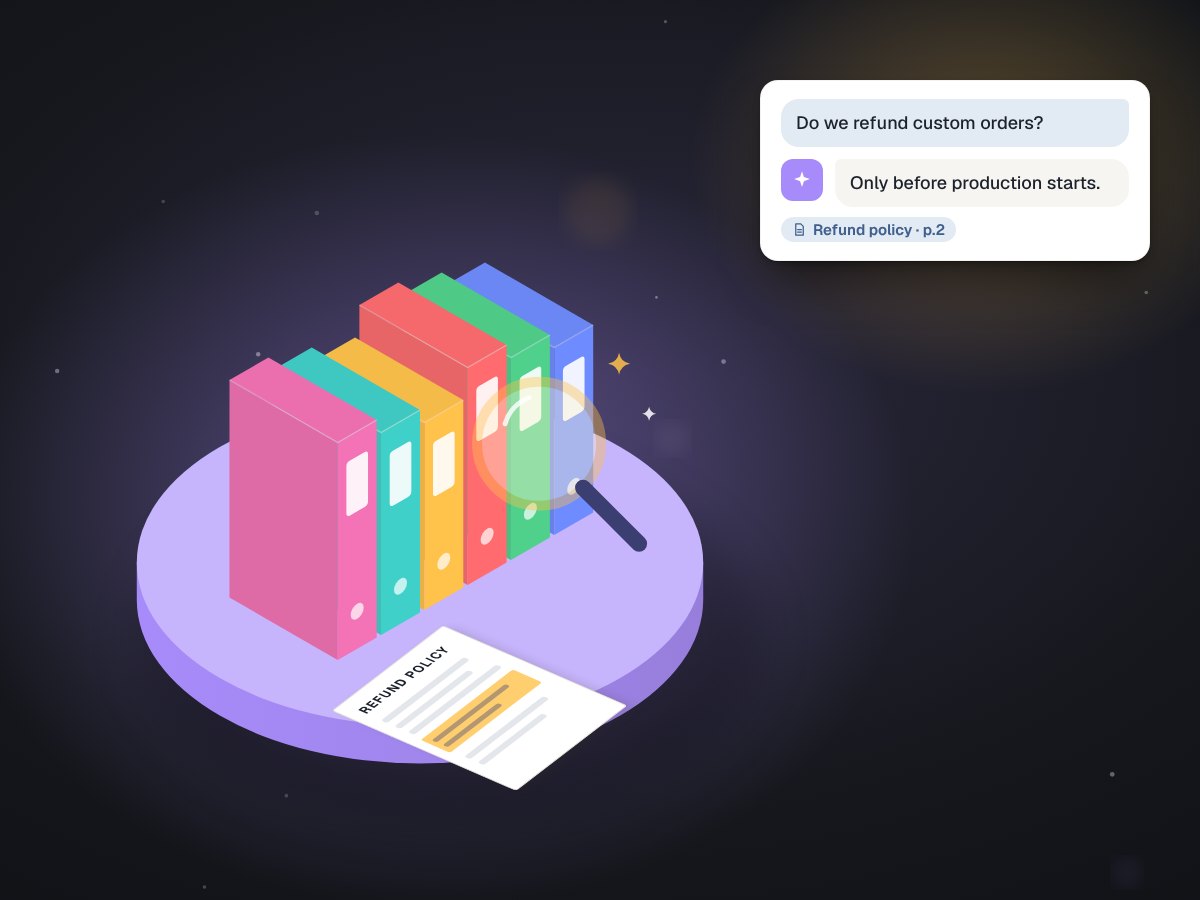
Sorting an inbox and drafting replies that wait for approval. Reading a form or a document and pulling out the fields that matter. Researching a question and coming back with sources. Checking a draft against your house rules. Answering questions from your own approved documents. Routing a request to the right person with a summary attached.
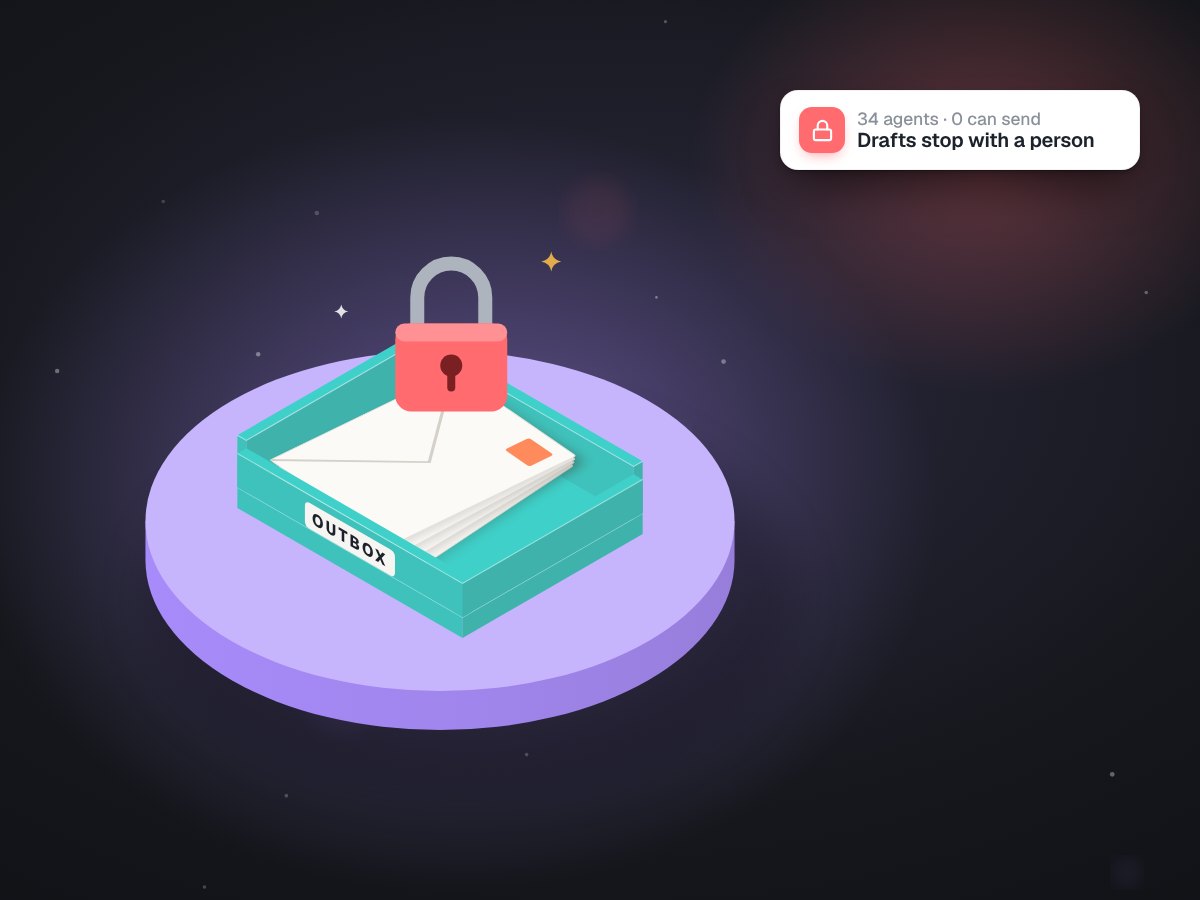
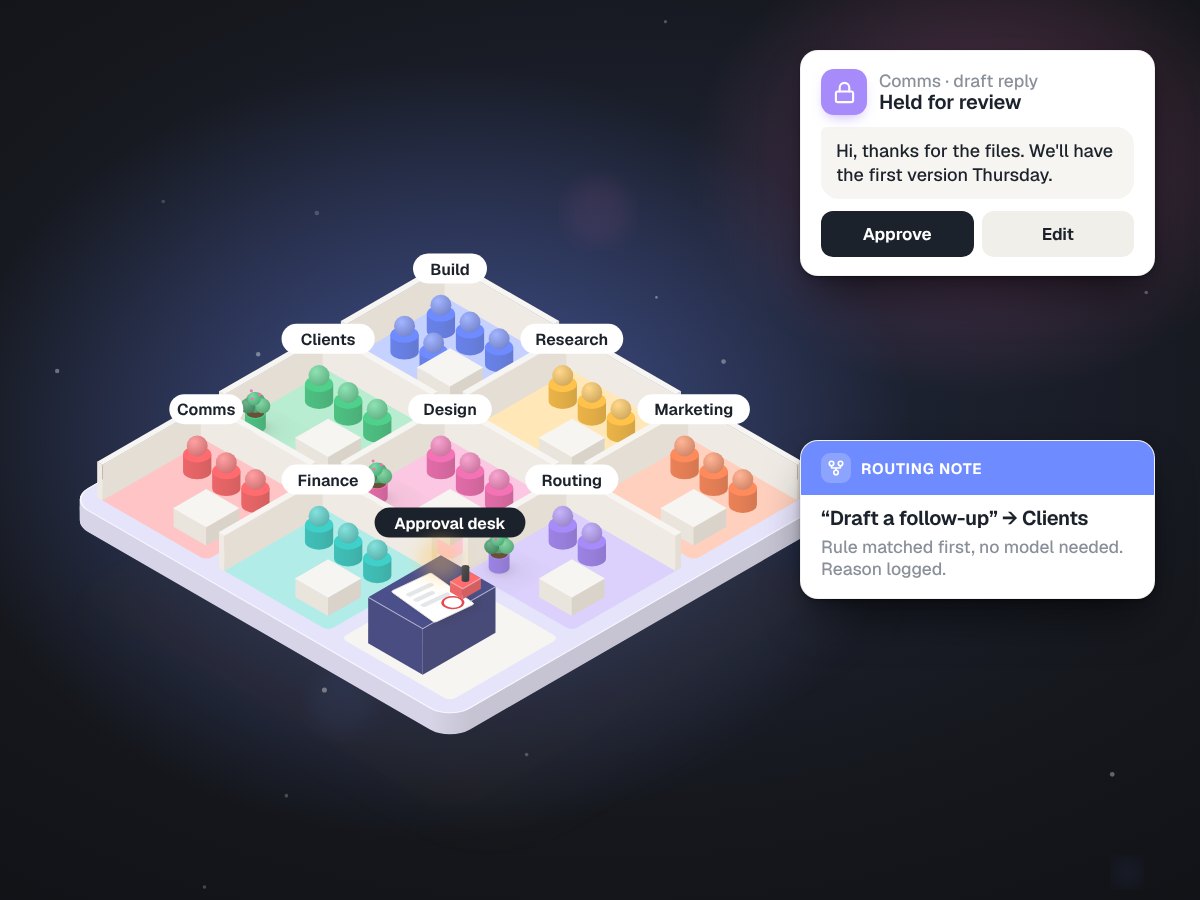
We run our own company this way. MUVES OS puts one assistant in front of 34 narrow agents in nine departments. One drafts follow-ups, one checks pages, one logs expenses from a plain sentence. None of them can send anything; drafts stop with a person.
Where they go wrong
Models can be confidently wrong, and an agent can act on that confidence. Three habits keep that in check. First, plain rules before the model: in our own system, a small model once read "draft an email to" a client as small talk, so now fixed rules handle the cases they are certain about before any model guesses. Second, a person approves anything that leaves the building, at least until a specific job has earned more trust. Third, something independent watches: our monitor runs on plain rules, not another model.
The question is not how clever the agent is. It is what it is allowed to touch.
Questions to ask before you use one
- Which tools can it use, and can any of them send, pay, delete or publish?
- What data does it see, and does the provider train on that data?
- What happens when it is unsure? It should stop and ask, not guess.
- Where is the log of what it did and why?
- Who reviews its work, and how would you know if it quietly stopped working?
If the answers are clear, an agent can take a real load off a small team. If they are vague, start smaller. Our AI agents and assistants work always starts with one narrow job and a person in charge; for systems where several agents draft and check each other, see multi-agent systems.