Explainers · Explainer · Part 3 of 6
What is a knowledge assistant?
An assistant that answers from your own documents, shows where the answer came from, and says so when the answer is not there. How it works and what to feed it.
In brief
- A knowledge assistant searches your approved documents first, then answers only from what it found, with the source attached.
- Its quality depends on the documents. Out-of-date price lists produce out-of-date answers.
- Test it with real questions your team and customers ask, including ones it should refuse.
Ask a general chatbot about your refund policy and it will answer confidently with somebody's refund policy. A knowledge assistant answers from yours. It is an AI assistant connected to a set of documents you choose, your price list, policies, product sheets, how-to guides and handbook, and it is built to answer only from them.
It can sit on your website for customers, in a chat for your staff, or behind a phone agent. The idea is the same: one place to ask, and an answer you can trace back to a page.
How it works
The common design is called retrieval. It has three steps:
- Prepare. Your documents are split into small passages and indexed so they can be searched by meaning, not just by exact words.
- Find. When someone asks a question, the system pulls the handful of passages most likely to hold the answer.
- Answer. The model writes a reply using only those passages, and cites which ones it used.
The model is not memorising your business. It is reading the right page at the moment of the question, the way a new employee would look something up in the handbook. Change the handbook and the next answer changes with it.
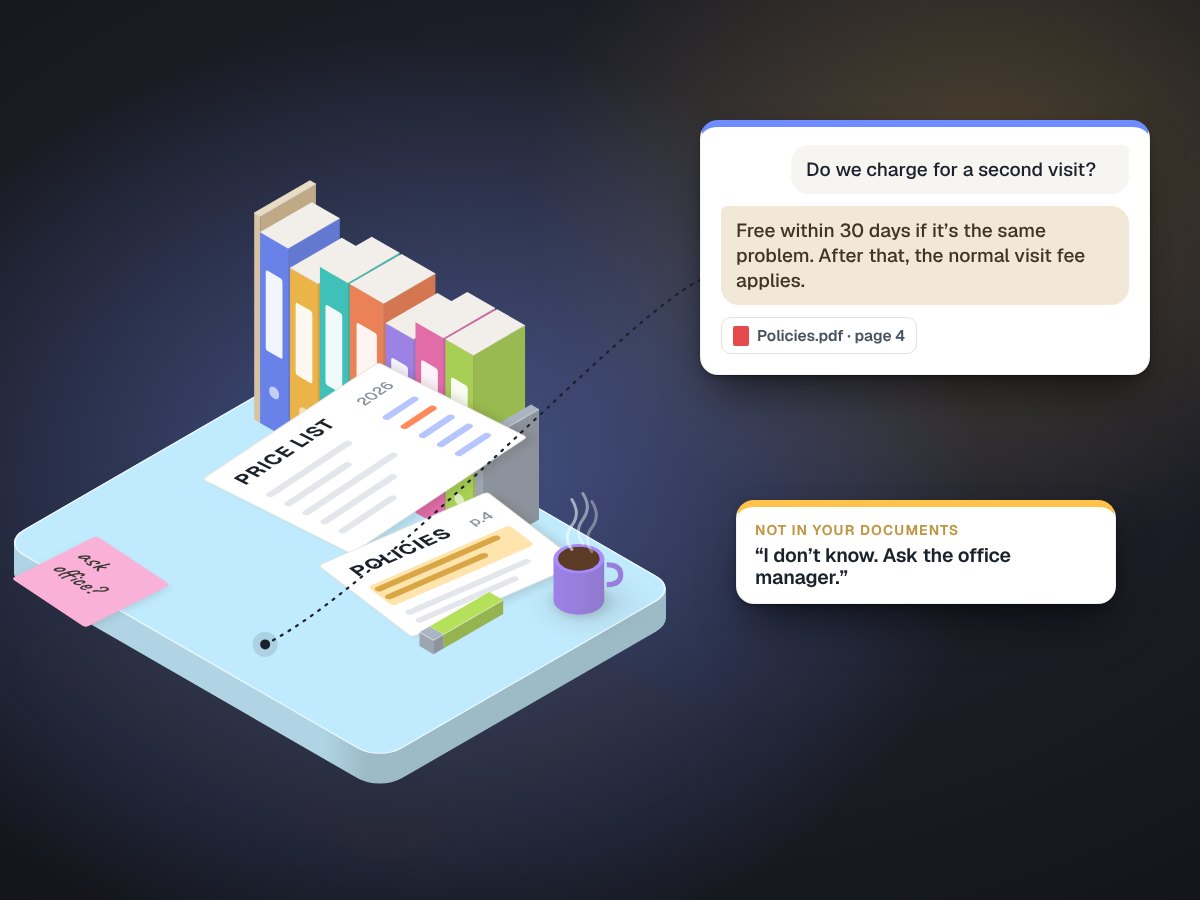
The most important thing it can say is "I don't have that, let me get someone."
What makes one trustworthy
- It shows its sources. Every answer links back to the passage it came from, so a person can check it in seconds.
- It refuses when the answer is not there. If nothing in your documents covers the question, it says so and offers a person, instead of filling the gap with a plausible guess.
- It only sees what it should. A customer-facing assistant should not be able to read staff pay rates. Separate collections for separate audiences.
- It is tested. Before launch, run it against a list of real questions, including awkward ones and ones it must refuse, and check every answer.
What to feed it
Exhibit 1Good sources and poor ones
| Feed it | Keep out, or fix first |
|---|---|
| Current price list and service menu | Last year's price list "for reference" |
| Written policies: returns, deposits, cancellations | Policies that only exist in someone's head |
| Product sheets and how-to guides | Drafts with conflicting versions |
| Staff handbook, for an internal assistant | Anything with customer or health details |
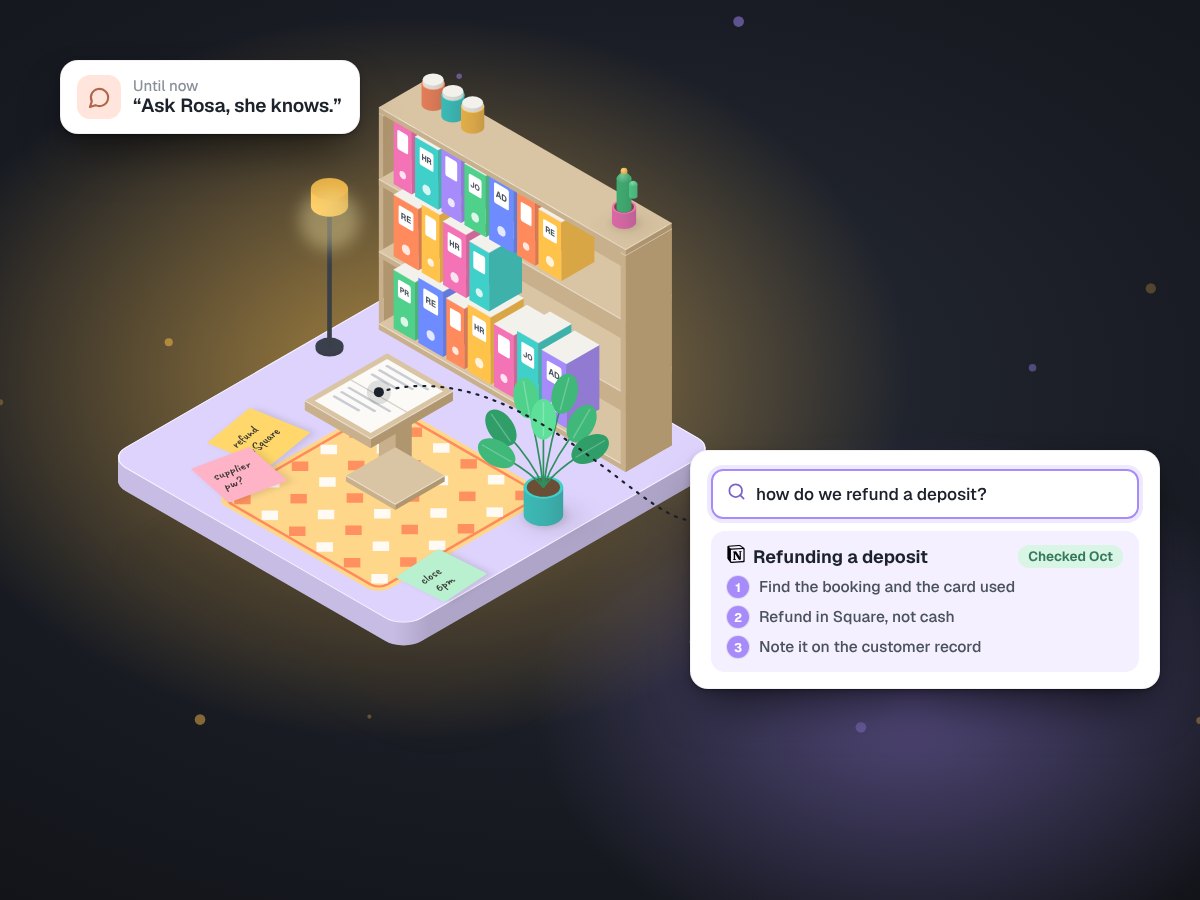
Most of the work is in that table. If your knowledge lives in people's heads, the first job is writing it down, which is useful on its own. Our knowledge base build-out does exactly that.
Where it helps most
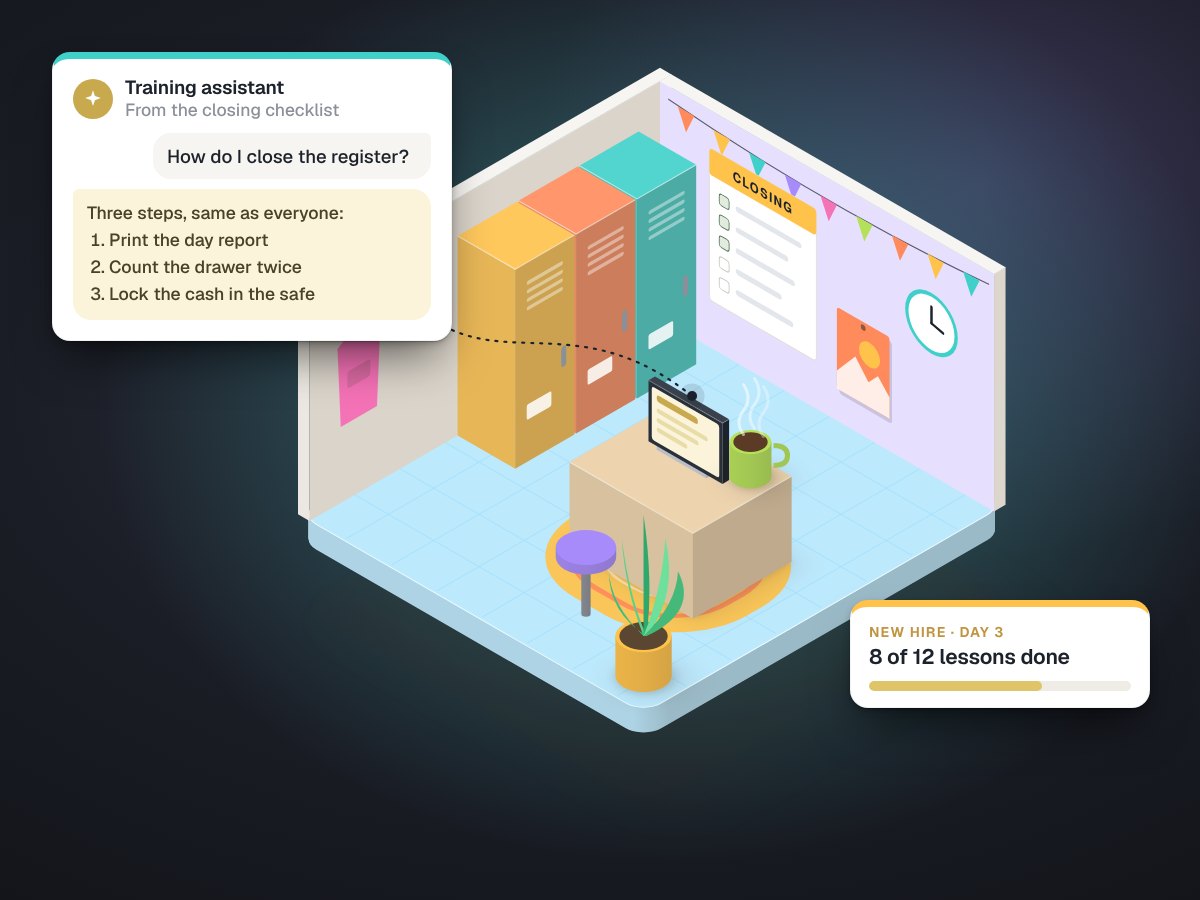
Customer questions that repeat all day. New staff who would otherwise interrupt the one person who knows. Technical how-tos, like the step-by-step scanner guides we wrote for a dental lab's customers covering eight scanner systems, which are exactly the kind of material an assistant can answer from. Internal policies that people look up rarely but need to get right.
Plan for upkeep from the start. Every time a price, a policy or a product changes, the document has to change too, or the assistant will keep repeating the old answer with full confidence. Give each document an owner and a review date, and read a sample of real questions and answers every week for the first month. The questions it could not answer are a free list of what your documentation is missing.
We keep our own company memory in a vault of notes that our assistants read before they answer, so every answer starts from what we already know. For a client, we would build it the same careful way: approved documents only, sources on every answer, a test set of real questions, and a clear hand-off when the answer is not there. See assistants on your documents and, for onboarding, staff training bots.